The poet Elizabeth Bishop believed that everyone should experience at least one prolonged period of solitude in life. For in true solitude, as Wendell Berry so memorably observed, “one’s inner voices become audible [and] in consequence, one responds more clearly to other lives” — an intuitive understanding of what psychologists have since found: that “fertile solitude” is the basic unit of a full and contented life. But in the neutral state of aloneness, the psychoemotional line between solitude and loneliness can be as thin as a razor’s edge and as lacerating to the soul.
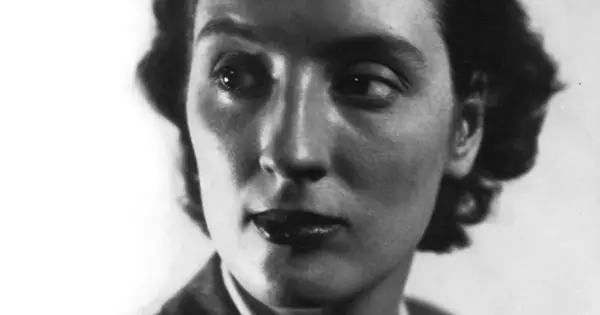
How to draw it skillfully in orienting ourselves to the world, exterior and interior, is what poet, novelist, and memoirist May Sarton (May 3, 1912–July 16, 1995) explores in a beautiful poem she penned ten days after her twenty-sixth birthday, decades before she came to contemplate solitude in stunning prose. Originally titled “Considerations,” the poem was slightly revised and published the following year as “Canticle 6” in Sarton’s second poetry collection, the altogether sublime Inner Landscape (public library). Alone one is never lonely: the spirit adventures, waking In a quiet garden, in a cool house, abiding single there; The spirit adventures in sleep, the sweet thirst-slaking When only the moon’s reflection touches the wild hair.
There is no place more intimate than the spirit alone: It finds a lovely certainty in the evening and the morning. It is only where two have come together bone against bone That those alonenesses take place, when, without warning The sky opens over their heads to an infinite hole in space; It is only turning at night to a lover that one learns He is set apart like a star forever and that sleeping face (For whom the heart has cried, for whom the frail hand burns) Is swung out in the night alone, so luminous and still, The waking spirit attends, the loving spirit gazes Without communion, without touch, and comes to know at last Out of a silence only and never when the body blazes That love is present, that always burns alone, however steadfast. Complement with Louise Bourgeois on how solitude enriches creative work, Virginia Woolf on the relationship between loneliness and creativity, and Olivia Laing’s masterwork on the art of being alone, then revisit other readings of beautiful poems of existential radiance: Derek Walcott’s “Love After Love,” Wisława Szymborska’s “Life-While-You-Wait,” Jane Kenyon’s “Having It Out With Melancholy,” and Adrienne Rich’s “Planetarium.” — Published November 1, 2026 — https://www.themarginalian.org/2026/11/01/may-sarton-canticle-6-considerations/ — The Marginalian participates in the Bookshop.org and Amazon.com affiliate programs, designed to provide a means for sites to earn commissions by linking to books.
In more human terms, this means that whenever you buy a book from a link here, I receive a small percentage of its price, which goes straight back into my own colossal biblioexpenses. Privacy policy. (TLDR: You're safe — there are no nefarious "third parties" lurking on my watch or shedding crumbs of the "cookies" the rest of the internet uses.)
Extract — continue reading at the source.