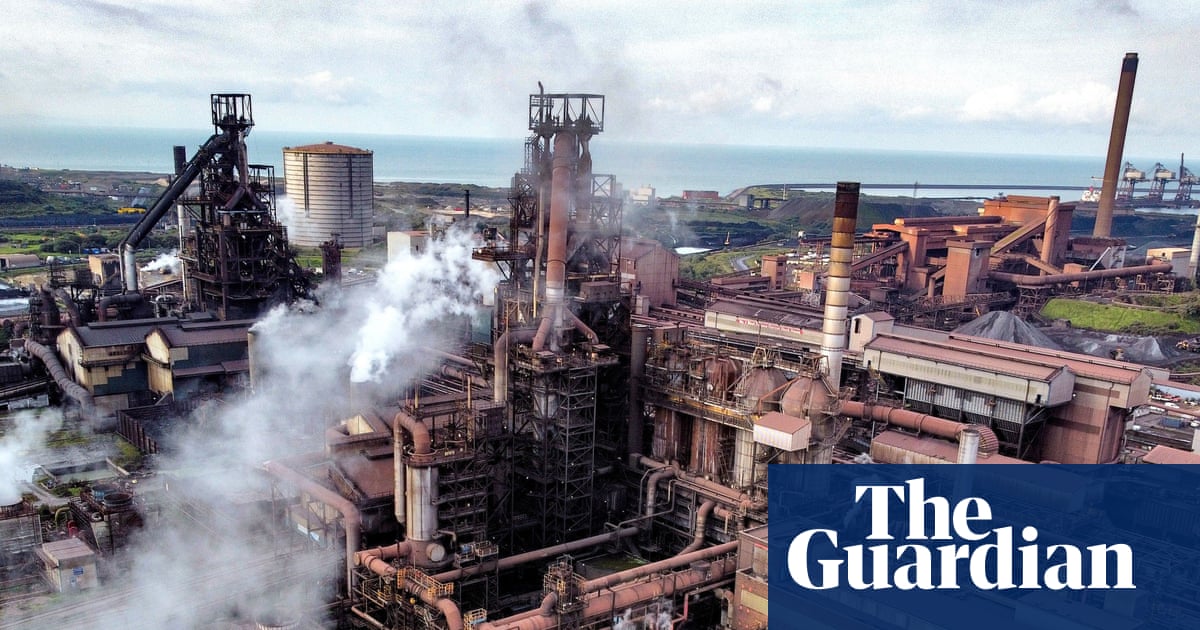
At Tata Steel’s factory in Llanwern, south Wales, production lines that should be running full-time are now falling quiet for parts of the day, with workers being put on to maintenance and cleaning work while machines sit idle. There aren’t enough orders to keep them running all the time, the company says, because of a surge of cheap steel coming from Asian countries that is threatening the viability of several UK sites that make similar products, and risk hundreds of jobs. New 50% import tariffs introduced by the government in July were designed to protect against cheap steel from countries including China and India from undercutting UK producers such as Tata.
But for some types of product, such as the galvanised steel made at Llanwern, near Newport, the situation has worsened, after the government increased the tariff-free quotas – the amount of steel that can be brought in without paying the levy – for some countries. India’s allowance of galvanised steel rose from 98,000 to 125,000 tonnes, while Vietnam’s more than tripled, from 51,000 to 174,000 tonnes. South Korea was given an increased quota of 100,000 tonnes.
The larger quota for India is understood to have been a last-minute move to help get a trade deal with the country over the line, which was first reported by the Financial Times. World Trade Organization rules require comparable exporters are. reated equally, forcing the increase in quotas to Vietnam and South Korea. Earlier this summer the Tata UK boss, Rajesh Nair, said he was “very concerned” about the new arrangement.
Now, nearly two months later, Llanwern is struggling to compete on price and running at about half capacity as a result. The factory produces about 600,000 tonnes of galvanised steel a year, nearly half the UK’s total demand. Galvanised steel is a type of steel that has been dipped in molten zinc, giving it a protective layer that can last for decades and stop it corroding.
It is widely used in items such as bridges, outdoor signs and car bodywork. The company is understood to have met Blair McDougall, the minister for industry, two weeks ago, and laid out the scale of the problem facing Llanwern. Russell Codling, the commercial director of Tata Steel, said: “Our world-class Zodiac galvanising line in Llanwern, south Wales, is already being significantly impacted by the new quotas, and that situation just isn’t sustainable.
The move will reduce its carbon emissions but it cost 2,000 jobs in the region when the blast furnace was closed down in 2024. The process involves £1.25bn in investment, about £500m of which has come from a government grant. But a steel industry source said prolonged tariff pressure could even endanger that switch.
Extract — continue reading at the source.