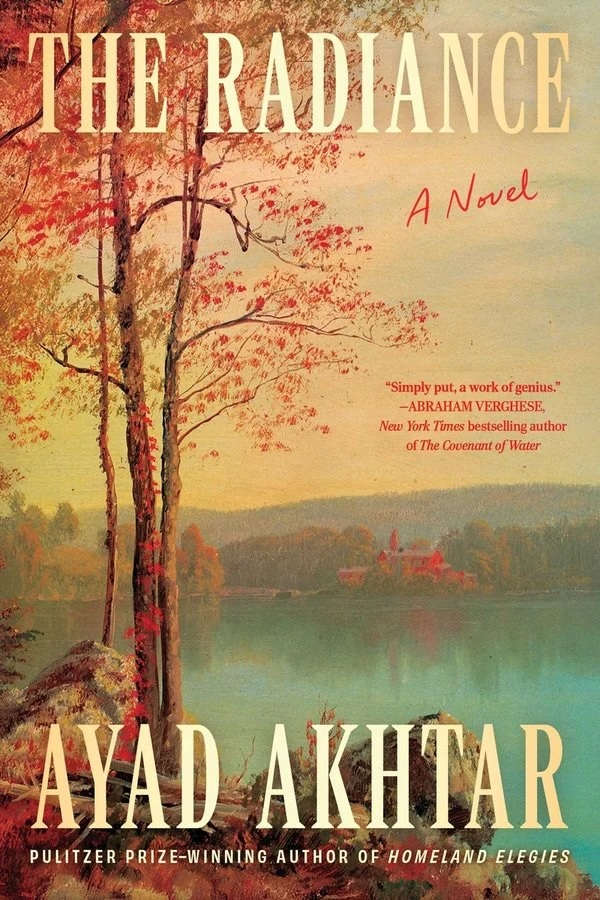
The narrator of The Radiance shares Akhtar’s name and much of his life. After leaving New York for a small Hudson Valley town, he ends up getting hit by a pickup truck during a bike ride. When he awakens from the subsequent coma, something is different: things appear lit from within and bathed in silence; and he’s impotent.
The luminous state has since deepened after an evening during which his cousin, Tanveer, disclosed a terrible family secret about his father. Lucie Neroponte, the friend who calls him in the passage below, teaches at a local college; an essay about the affair she had with her own professor when she was twenty made her name. Like Lucie, I had qualms about teaching, though mine had nothing to do with eros.
Rather, I worried that the security of a job in the academy might dull me as a writer. By my mid-twenties, I’d begun to see a pattern: an inclination toward fantasy over fact, a tendency to cling to illusion long past the point any evidence could justify. Reality always won—usually after the painful humiliations to which my delusions led.
I was too compelled by the comforts of my imagination—which was, of course, why I wanted to be a writer in the first place. But those same attachments, I came to see, kept my work from feeling real. Early experiences in the theater proved salubrious.
Humiliation was a reliable corrective, and I found that the ruthless impersonality of a paying audience made the shame bearable. I learned from jokes that didn’t work and story threads that didn’t track. Mid-show walkouts and anemic applause hurt, yes, but not so much that I couldn’t learn to heed them.
My skits and plays got better. As my peers took on teaching jobs with health care, pension plans, and just enough to live on, I was tempted to follow. But I worried about what I might lose in finding protection from the forced encounter with audiences.
Extract — continue reading at the source.