On August 29, 1511, Isabella d’Este, the Marchioness of Mantua, patron of the arts, fashion icon, and one of the most famous women in Renais-sance Italy, suffered a great loss. Isabella was an animal lover, and she loved little dogs in particular. Her courtiers always knew she was about to enter a room when they heard the approaching yaps.
Isabella’s very favorite dog was Aura—“the prettiest and most agreeable little dog that there ever was,” according to Isabella’s secretary, Gian Giacomo Calandra. It was Aura who met her unfortunate end on August 29. She had been playing a game of chase with Mamia, another little member of the d’Este pack, when she fell off a balcony at the top of a tall staircase and plunged to the courtyard far below, dying instantly.
The next day Calandra wrote with the sad news to d’Este’s eleven-year-old son, Federico II of Gonzaga, who was being held in Rome as the political hostage of Pope Julius II. Isabella had been inconsolable, crying at dinner as if it were her own mother who had died, and Calandra admitted that “I too have shed some tears.” Isabella immediately set about making funeral preparations: ordering a lead casket, preparing to lay the first stone of the dog’s tomb with her own hands when astrological calculations dictated it was the right moment. She let it be known that she welcomed epitaphs for Aura’s tomb, and over the next few months scholars and amateur poets across Italy sent their offerings.
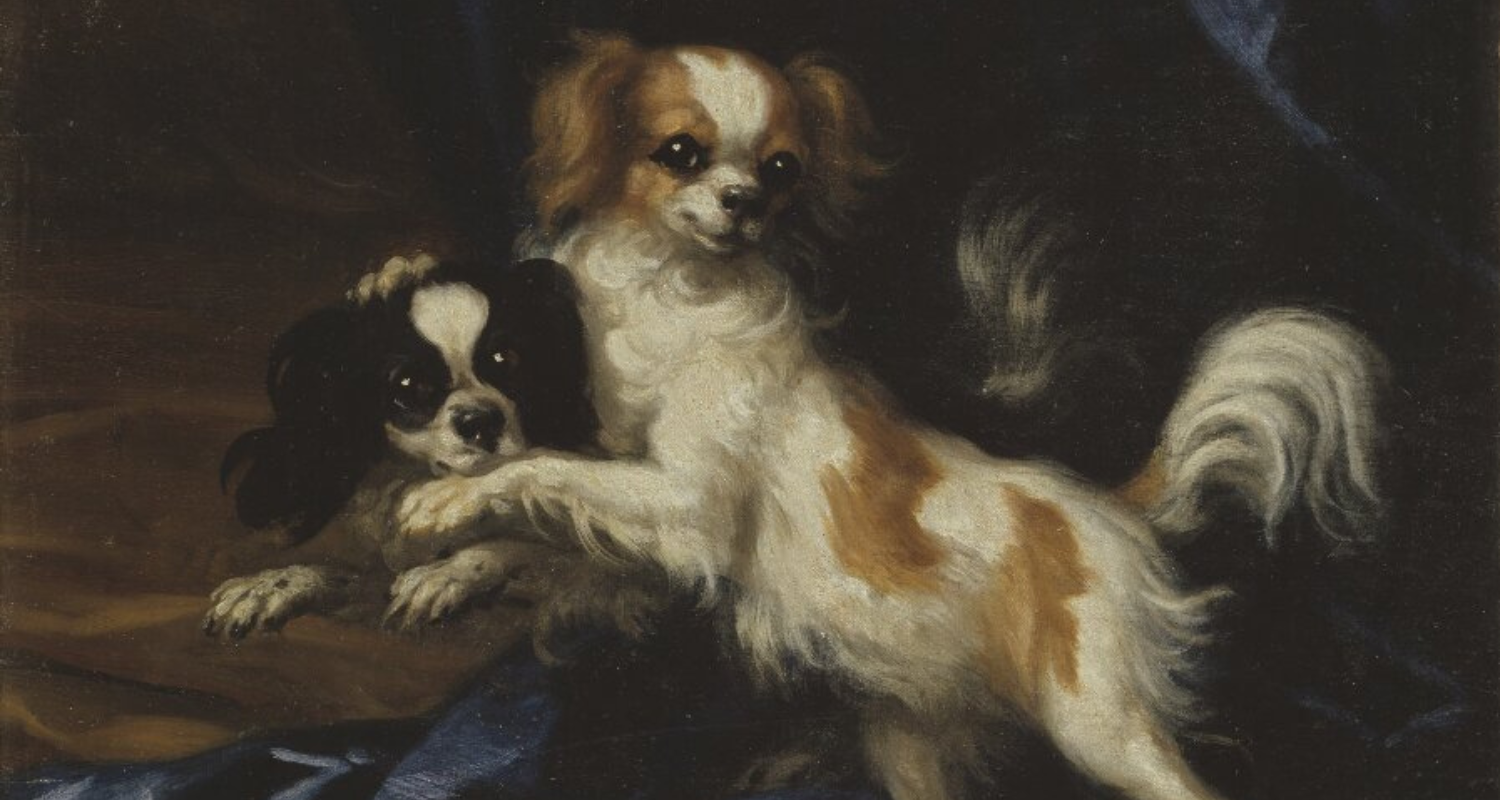
The keeper of the Vatican library even sent to Isabella, via her son, some lines of poetry on the dog’s death. As well as being commemorated in verse, it is possible that Aura was also immortalized on canvas. As one of the most influential patrons of art during her lifetime, Isabella commissioned paintings that reflected her love of her little dogs.
Two portraits of a woman thought to be Isabella—one by the painter Lorenzo Costa, another attributed to Il Cavazzola or Giulio Campi—depict her with a hairy little white dog, who was perhaps Aura, or, if not, one of her relatives. (The first hangs in the king’s dressing room in Windsor Castle; the other is kept in a bedroom at Hearst Castle in California, the inspiration for Xanadu in the 1941 film Citizen Kane.) Costa, Campi, and Cavazzola were all accomplished painters, but it seems their talents didn’t quite stretch to dogs. Little dogs could also function as a sign of wealth. Some paintings invited a comparison between little dogs and luxury items.
The creature in their portraits has an unnervingly human face and a strangely feline nose. Isabella’s son Federico II seems to have taken more care to have his own pets depicted accurately. He inherited his mother’s love for little dogs and as an adult had them accompany him in his portraits.
Extract — continue reading at the source.