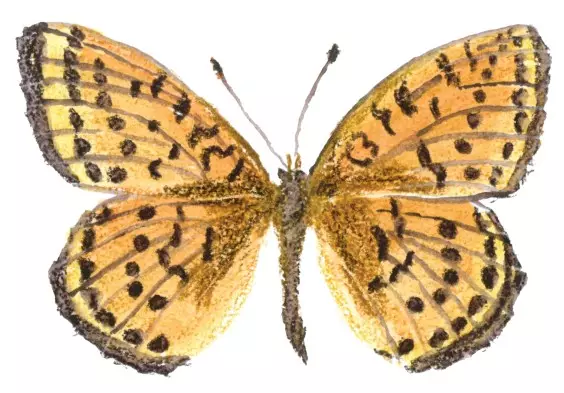
The first time I said out loud that I wanted to see every butterfly in my home country of Denmark in a single year, I didn’t know anything about butterflies. I had seen the peacock, the mourning cloak, the small tortoiseshell, the brimstone. I also thought I had seen “the white” and “the blue.” I didn’t know there are three different whites in Denmark, and a whole procession of blues.
Read more: “We Crush, Poison, and Destroy Insects at Our Own Peril” I later found out that there are 64 Danish species in total, but I didn’t know that from the get-go. Also, I was convinced that the brimstone butterfly was yellow. The brimstone is not yellow.
It is the color of fresh asparagus. My butterfly expedition was a foolish project. There was no reason I should spend my rather scarce free time hunting for insects.
I had other things to attend to: meetings, packed lunches... I couldn’t explain its purpose even to myself. I wandered over coastal meadows, through deep forests, looking for small creatures with four scaled wings—but also looking for the reason I was even there at all.
In landscapes I hadn’t known existed until now. The project was useless, but it turned out to be necessary too. As I slowly grew at home in the discipline—as I got to learn the species names, to tell apart the shapes of the insects’ wings, their flight over the grass, the way they defended their territory—the character of my outings changed.
I began to see more, simply. What I would have once considered just another dull field suddenly transformed into a whole universe in itself: a dazzling place of shimmering blue butterflies, amber-colored caterpillars, and beetles with shells like a seal of wax. The butterflies, I realized, changed the way I moved through and sensed the world.
Extract — continue reading at the source.