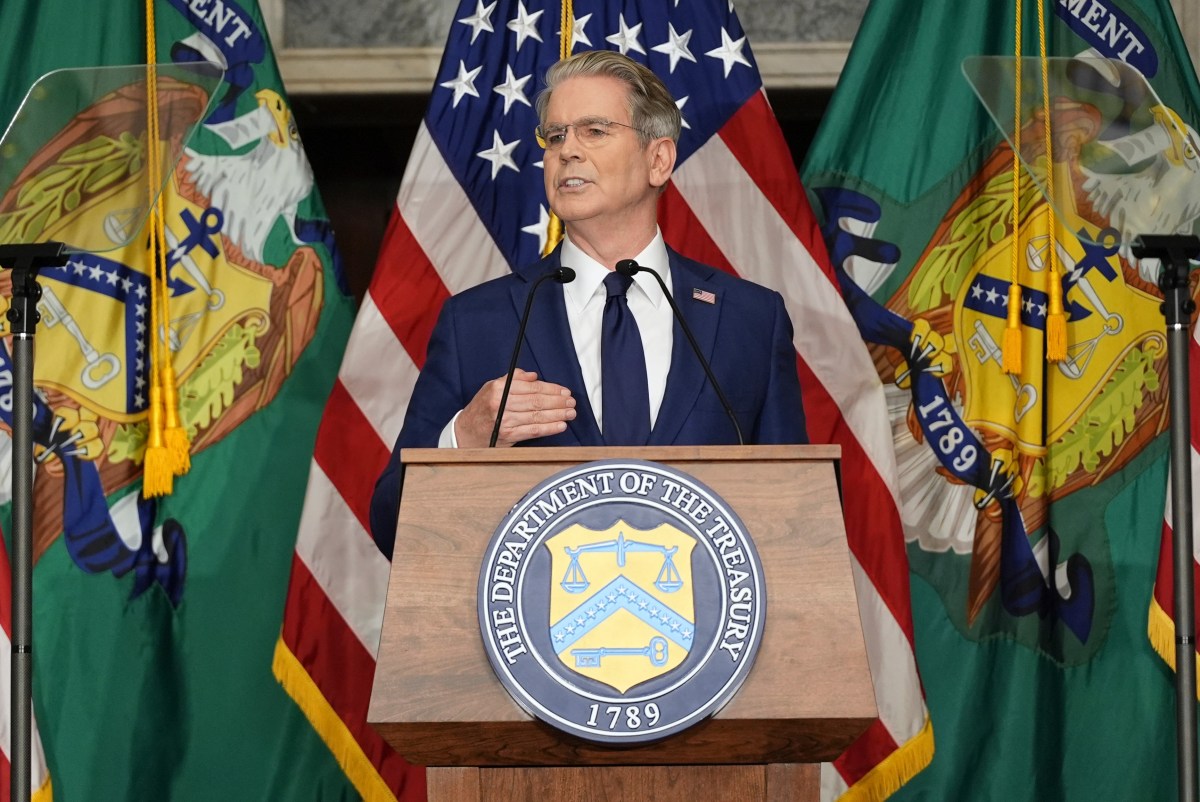
The Trump administration on Monday launched what it described as an unprecedented economic offensive against Iran, unveiling a sweeping package of sanctions, enforcement measures and diplomatic pressure aimed at cutting off the Islamic Republic's remaining financial lifelines. Treasury officials said the initiative, dubbed "Operation Economic Outcast," would target countries, companies and individuals that continue doing business with Tehran while expanding sanctions authorities across key sectors of Iran's economy. "Let there be no ambiguity as to the position of the United States: economic engagement of any kind with this murderous regime will expose those responsible to the full reach of American power," Treasury Secretary Scott Bessent said at Monday's press conference.
The announcement marks a major escalation in President Donald Trump's pressure campaign against Iran and comes as the administration seeks to deepen the economic isolation of a country already grappling with inflation, a weakened currency and growing trade restrictions. Bessent said the objective is to "sever every economic lifeline" sustaining the Iranian government and the Islamic Revolutionary Guard Corps. Iran swiftly condemned the move.
Foreign Ministry spokesperson Esmail Baghaei warned Monday that Tehran would respond forcefully to any expansion of U.S. sanctions, while the newly appointed head of Iran's top security body said support for the new measures would be regarded as an "act of war." The latest confrontation follows a series of setbacks for Tehran, including the United Arab Emirates' decision last week to suspend all trade with Iran. Yet Iran continues to maintain leverage through the Strait of Hormuz, where attacks and threats against commercial shipping have significantly disrupted one of the world's most important energy transit routes. At the center of Monday's announcement is a significant expansion of sanctions authorities covering five sectors that Treasury says have become critical to Iran's economic survival: digital assets, technology, gold, aviation and shipping.
The administration said the move will make it easier to sanction foreign individuals and businesses operating in or supporting those areas of the Iranian economy. Treasury argues that Iran has increasingly turned to cryptocurrency, gold markets and international shipping networks to evade existing restrictions while acquiring technology and supporting military activities. Bessent's announcement came as Iran's currency sank to a fresh record low.
The rial traded at roughly 2.02 million to the U.S. dollar on the open market Monday, compared with the central bank's official rate of about 1.5 million rial per dollar. The currency had been under pressure even before U.S. and Israeli strikes on Iran on February 28, amid years of high inflation and weak economic growth. Nearly six months of conflict have deepened the crisis, with the rial repeatedly setting new lows.
The economic fallout has increasingly strained ordinary Iranians. Prices for staple goods have surged, with rice costing about 60 percent more than before the war and beef prices rising by more than 150 percent. The International Monetary Fund has projected that Iran's economy will shrink by more than 5 percent this year.
Extract — continue reading at the source.