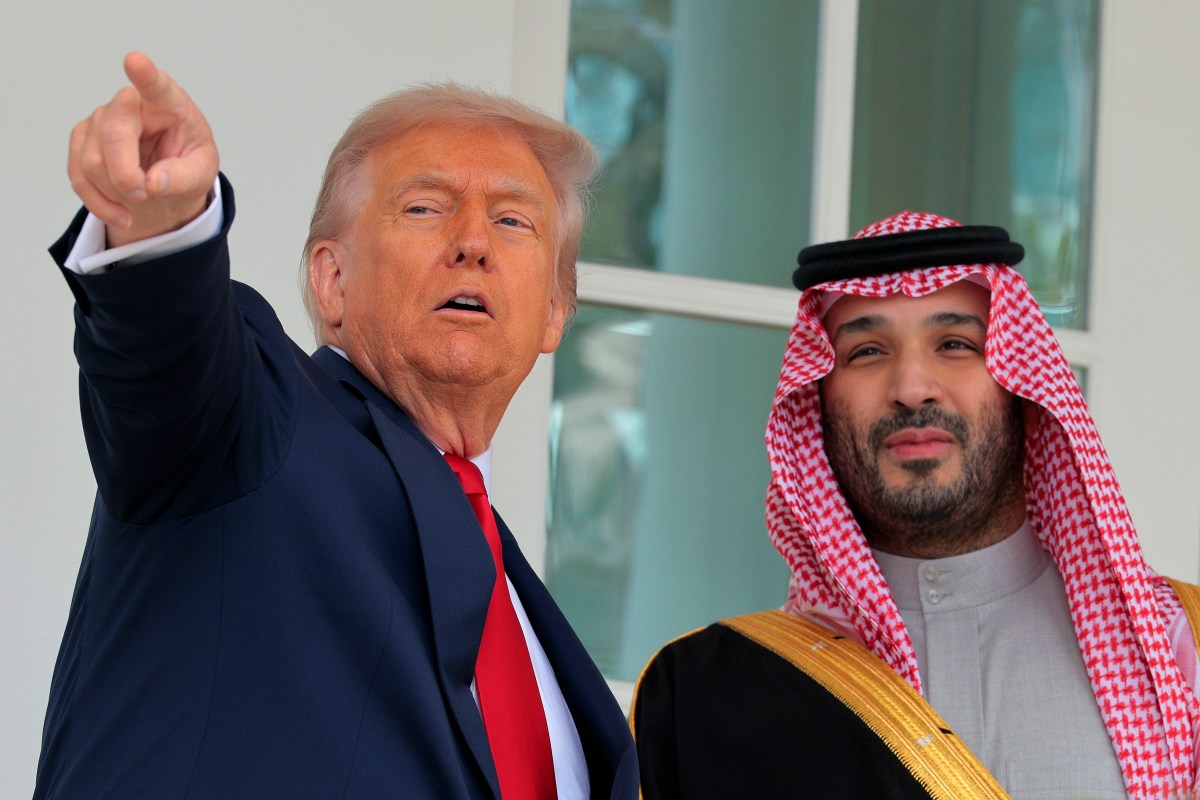
The White House's decision to greenlight the sale of advanced F-35 fighter jets to Saudi Arabia marks the latest example of President Donald Trump's efforts to shift the burden of Middle East deterrence to regional partners. The deal is subject to congressional approval, and the warplanes are not expected to arrive for years, far too long a timeline to immediately rein in rising oil and gas prices impacted by the multi-front conflict between the U.S. and its partners in the Middle East on one side and the Axis of Resistance coalition led by Iran on the other. Israeli officials have expressed criticism of any Saudi F-35 acquisition absent a normalization of diplomatic ties, fearing the move would dilute the Israel Defense Forces' aerial dominance in the region.
Some U.S. lawmakers also warn the deal could expose cutting-edge U.S. military technology to other foreign powers, such as China, which maintains close ties with Saudi Arabia. But the decision carries major implications for both Washington and Riyadh as they navigate a historic period of turbulence in the region that puts the Kingdom on the front lines in an escalating clash with neighboring Yemen's Iran-aligned Ansar Allah, also known as the Houthi movement. "The U.S. administration's approval of the sale of F-35 fifth-generation stealth fighters to the Kingdom of Saudi Arabia represents a pivotal milestone that reshapes the concept of traditional security alliances," Saad Abdullah Al Hammad, a former Saudi diplomat, told Newsweek.
"This development comes at a sensitive juncture when Washington is scaling back direct offensive military support to Riyadh in the context of the war with the Houthis," Al Hammad said. "This reflects a fundamental shift in the American doctrine of 'outsourcing security' and reducing direct field engagement in favor of arming allies with advanced deterrence tools." Saudi Arabia is one of the few Arab states to have avoided European colonization or protectorate status since the establishment of the Kingdom in 1932. But since World War II, its security as a leading oil producer and influential custodian of Islam's two holiest sites has been closely linked to robust ties with the U.S.
Much like Crown Prince Mohammed bin Salman seeks to wean off the Saudi economy's reliance on energy sales through his transformative Vision 2030 plan, he's also pursued a diversification of security relations, to include stronger cooperation with China and Russia and a recent mutual defense pact with Pakistan and Turkey. Underlying this trend is a quest to put more potent tools in the hands of the Kingdom, a mission that aligns with Trump's efforts to offload the burden of Middle East deterrence and simultaneously boost U.S. defense sales. "The policy of burden-sharing has emerged as a significant factor," Al Hammad said.
"Washington has sought to fully transfer field responsibility to its key regional partner by granting military delegation, in exchange for ensuring a steady flow of massive defense contracts that invigorate the U.S. military-industrial complex." "Similarly, regarding sovereign decision-making independence, Riyadh realized that absolute reliance on the U.S. security umbrella is subject to the fluctuations of successive administrations, which necessitated a decisive drive toward strategic independence and the diversification of military and diplomatic options," he added. The F-35 would embody the Kingdom's initiative by granting the Royal Saudi Air Force modern stealth and strike capabilities, including lower-cost integrated systems, to tackle missile and drone platforms in the hands of not only Ansar Allah, but also fellow Axis of Resistance factions in Iraq, from which Riyadh has said a drone that damaged the crucial East-West pipeline last week originated. The utility of the aircraft was underscored by the reported downing of an earlier U.S.-made Saudi warplane, an F-15, by an Ansar Allah anti-air system in Yemen earlier this week.
The Saudi Defense Ministry has not confirmed nor commented on the alleged incident. But not only are these fighters "considered a vital element in the equation to deter the Iranian axis," Al Hammad said, their introduction into the Saudi arsenal "shatters the traditional monopoly associated with preserving Israel's absolute military supremacy in the region, despite ongoing debates within U.S. legislative institutions and conditions protecting classified technology." And while he said their effectiveness would be subject to Saudi Arabia's ability to integrate them into the military, he argued that "F-35 fighters grant the Royal Saudi Air Force an undisputed qualitative edge." For Israel, the deal is viewed as a direct challenge. The longtime U.S. ally signed its first deal to obtain F-35s back in 2010 and received its first jets in 2016.
Extract — continue reading at the source.