BEIRUT — America opened its “forever war” in Iraq more than 23 years ago with “Shock and Awe.” It ended it on Wednesday with little of either, even as the legacy of that conflict — which saw Iraq endure sectarian bloodbaths, civil war and an insurgency that made Baghdad the car bomb capital of the world — continues to cast its shadow on the country today. President Trump, summing up the U.S. role in Iraq as “a very expensive excursion into Hell,” said, “This day is a victory for the United States, a victory for Iraq.... We’re getting the hell out of there.” It was the second time U.S. forces have pulled out of Iraq.
The first withdrawal took place in 2011, capping the occupation that began in 2003 and toppled Iraqi dictator Saddam Hussein, and which resulted in Iraqi deaths that number 110,000 to four times greater and the loss of about 4,500 U.S. service members. But three years later, Islamic State jihadis scythed through wide swaths of Iraq, scooping up U.S.-supplied materiel — as Iraqi troops literally ran away — and seizing control of nearly a third of the country. The U.S., this time at the Iraqi government’s request, led a coalition in a campaign — named Inherent Resolve — that by 2017 had destroyed Islamic State’s caliphate and driven most of its fighters into Syria.
Since then, Iraqi forces have fought Islamic State remnants engaged in a low-level insurgency around the country’s remote areas. Most U.S. and coalition forces, which numbered around 2,500, began leaving Iraq in October 2025, so that by Wednesday all that was left to withdraw were a few hundred service members stationed in Irbil air base in northern Iraq, once the operational hub of Inherent Resolve. Brad Cooper, the commander of U.S.
Central Command, in a statement. Central Command said the anti-ISIS mission would continue, with the coalition now headquartered in Jordan. The agreement to end the U.S. presence in Iraq was forged by President Biden in 2024 but was continued by Trump, who had made aversion to foreign entanglements — he called the Iraq war “the worst single mistake ever made in the history of our country” — a centerpiece of his presidential campaigns.
On Wednesday, Trump launched into a broadside on Biden. He compared the United States’ uneventful withdrawal from Iraq to the chaos that marked its pullout from Afghanistan in 2021, which saw the U.S. leave behind tens of thousands of Afghans who had worked with American forces, and abandon much of its materiel. Trump said he directed the military to safeguard U.S. supplies and equipment.
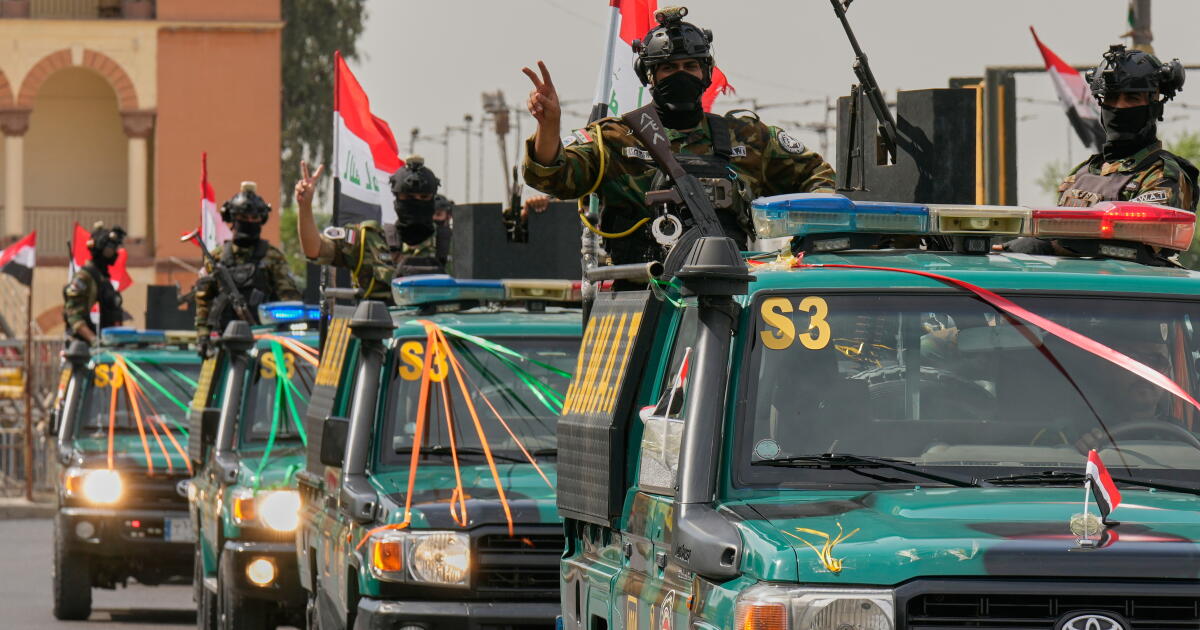
Iraq’s government also marked the moment, announcing a four-day holiday it called “Sovereignty Days” and holding a military parade in Baghdad’s streets. Speaking at a closed-door ceremony in Baghdad, Iraqi Prime Minister Ali al-Zaidi hailed the moment as “a new phase” defined by “Iraq’s sovereignty, the strength of its institutions, the readiness of its forces, unity of decision-making, and balanced partnerships with its friends.” All of those elements are likely to be tested as never before in the coming weeks, as Iraq walks a diplomatic tightrope between Washington and Tehran, its two top allies, now locked in a war that shows no sign of abating. Iran over the years of U.S. occupation built considerable influence in Iraq, nurturing militias there since 2003.
Extract — continue reading at the source.