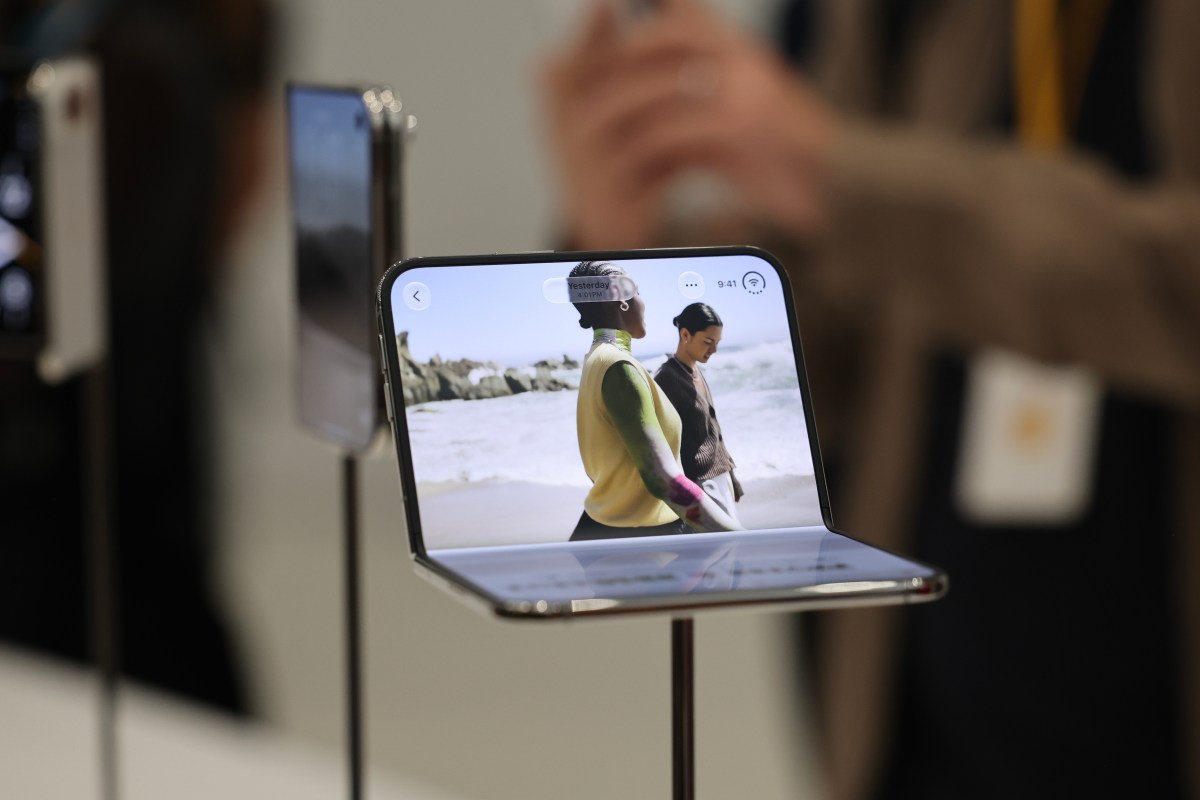
Current OLED screens, as used in Apple’s new foldable iPhone, have one element that could be vastly improved and the clue is in the name of the technology. Organic Light-Emitting Diodes (LEDs) mean each pixel on the display creates its own light using organic carbon-based materials, without needing a separate backlight. And that makes for some very enjoyable viewing on displays, including televisions, tablets, phones, and watches, made by manufacturers wanting to deliver the best quality displays available on the market today.
But a New Mexico company believes that its technology can help create even better screens that are brighter, faster, more cost-effective, longer-lasting and deliver an even better viewing experience, using newer MicroLED technology. In theory, they could even be as rollable as a roller blind, projection screen, or a newspaper in a Harry Potter movie. "The O in OLED means organic, so it can die somewhat easily and relatively quickly, even faster when the brightness is turned up," Bruce Berkoff, chief marketing officer for iBeam Materials, told Newsweek.
"As foldable phones and tablets grow in popularity, iBeam Materials' approach can lead to much better and less expensive solutions than currently being used or developed. This also could lead to both affordable and truly ‘rollable’ large-screen TVs, as well as indoor and outdoor advertising displays in the future." MicroLED screens replace the organic carbon-based compounds of OLED displays with millions of tiny inorganic LEDs, typically made from semiconductor materials. The arrays of microscopic LEDs create near-perfect images, colors and blacks.
Its future application is virtually limitless in the display sector, powering televisions, public displays, mobile phones, smartwatches and smart glasses. A few MicroLED displays are already available, but they are out of reach for most people, because manufacturers have not yet found a way to make them affordable and scalable for mass markets. The 146-inch 4K display from Samsung called the Wall All-in-One is one example of the problem facing MicroLED technology: it costs $219,999.
But iBeam Materials believes its patented roll-to-roll manufacturing technique would replace very fiddly and costly manufacturing steps. MicroLEDs are typically grown on single crystal sapphire wafers before being transferred to a backplane containing the circuitry that controls the picture. Depending on a display’s size and resolution, manufacturers may have to move, align, and connect millions of components.
Even a low defect rate can leave dead pixels when so many parts are involved. Finding and repairing those faults adds time and expense. Omdia, the technology research firm, says high costs, limits in mass-transfer systems and backplane-yield problems have constrained commercialization.
Extract — continue reading at the source.