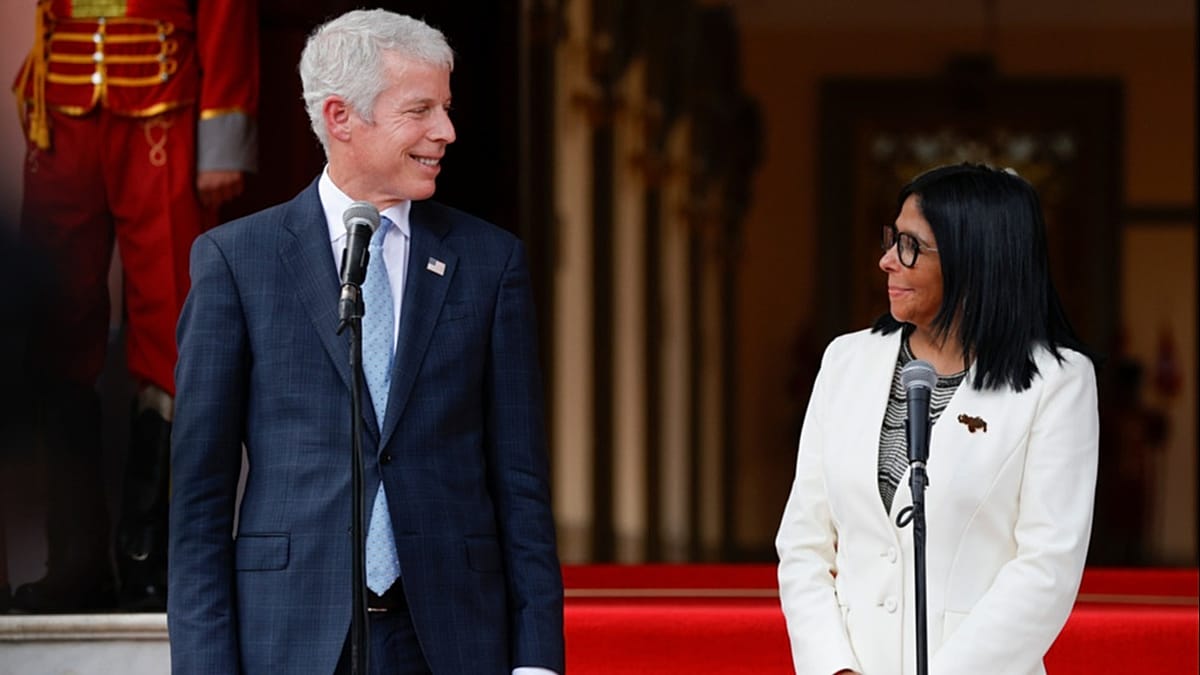
US energy firms signed a series of multi-billion-dollar deals with Venezuela on Wednesday, days after the South American country agreed to grant Washington control of a huge chunk, roughly one-fifth, of its vast oil reserves. US Energy Secretary Chris Wright travelled to Venezuela’s capital Caracas to oversee the signing of deals worth "tens of billions of dollars of investment," seen as a quid pro quo for Washington winning majority control of 65 billion barrels of Venezuelan oil reserves. Wright said the deals signed by Venezuela with US oil major Chevron, GE Vernova – a General Electric offshoot – and Italy's ENI were "critical in starting this ball rolling of peace, opportunity, and prosperity" in the country.
US President Donald Trump has talked up the agreement on Venezuela's oil reserves as the "biggest oil deal in world history." It comes as US Republicans brace for possible losses in November midterm elections due to spiralling fuel costs brought on by his war against Iran, and a broader national affordability crisis in housing, food, utilities and other basic needs. But the deals have raised major questions about Venezuela's sovereignty. Critics in both the US and Venezuela accuse Trump of holding the country for ransom after ousting former president Nicolas Maduro in a raid and warning that Rodriguez could face a similar fate if she doesn't fall into line with Washington's demands.
The US was not "stealing Venezuelan oil," Wright insisted. "All we're doing is taking an idle, underground asset that isn't doing anything for Venezuelan people and bringing the money, the technology to develop it.” Interim President Delcy Rodriguez earlier denied she was surrendering her country's riches, saying that cutting the US in on Venezuela's oil wealth is necessary to secure investment in the oil sector. More oil "translates into more jobs, higher wages, better public services, hospitals, schools and food," she said.
Rodriguez has estimated that Venezuela will make $209 billion (€180 billion) in profit from the deals over 25 years. US Oil giant Chevron confirmed that it will expand operations in Venezuela after President Donald Trump announced an ambitious deal to develop the nation’s oil reserves and give the Pentagon a stake in the profits. Chevron, the only US oil company with a major presence in Venezuela, said on Wednesday that it has been assigned additional acreage in the Orinoco Belt, where it has active operations.
The company plans to invest more than $7 billion (€6 billion) over the next five years, with the goal of more than doubling its current production to about 600,000 barrels a day. Venezuela holds the world's largest proven reserves, totalling more than 303 billion barrels of crude oil, according to OPEC's 2025 Annual Statistical Bulletin. Saudi Arabia is a distant second with 267 billion barrels.
The agreement has been met with scepticism from energy experts who say it will take years to revive Venezuela’s oil industry, which is in disarray after years of neglect. There are also questions about whether Venezuela’s acting president, Delcy Rodríguez, has the authority to give North American Blue Energy Partners (NABEP) 100-year rights over 17 oil fields with reserves of 65 billion barrels — and whether future Venezuelan or American administrations would overturn the deal. Venezuela's constitution states that arrangements like the one that the United States has entered must be approved by the National Assembly, which has not happened, wrote Ian Vásquez, vice president for international studies at the Cato Institute.
Extract — continue reading at the source.