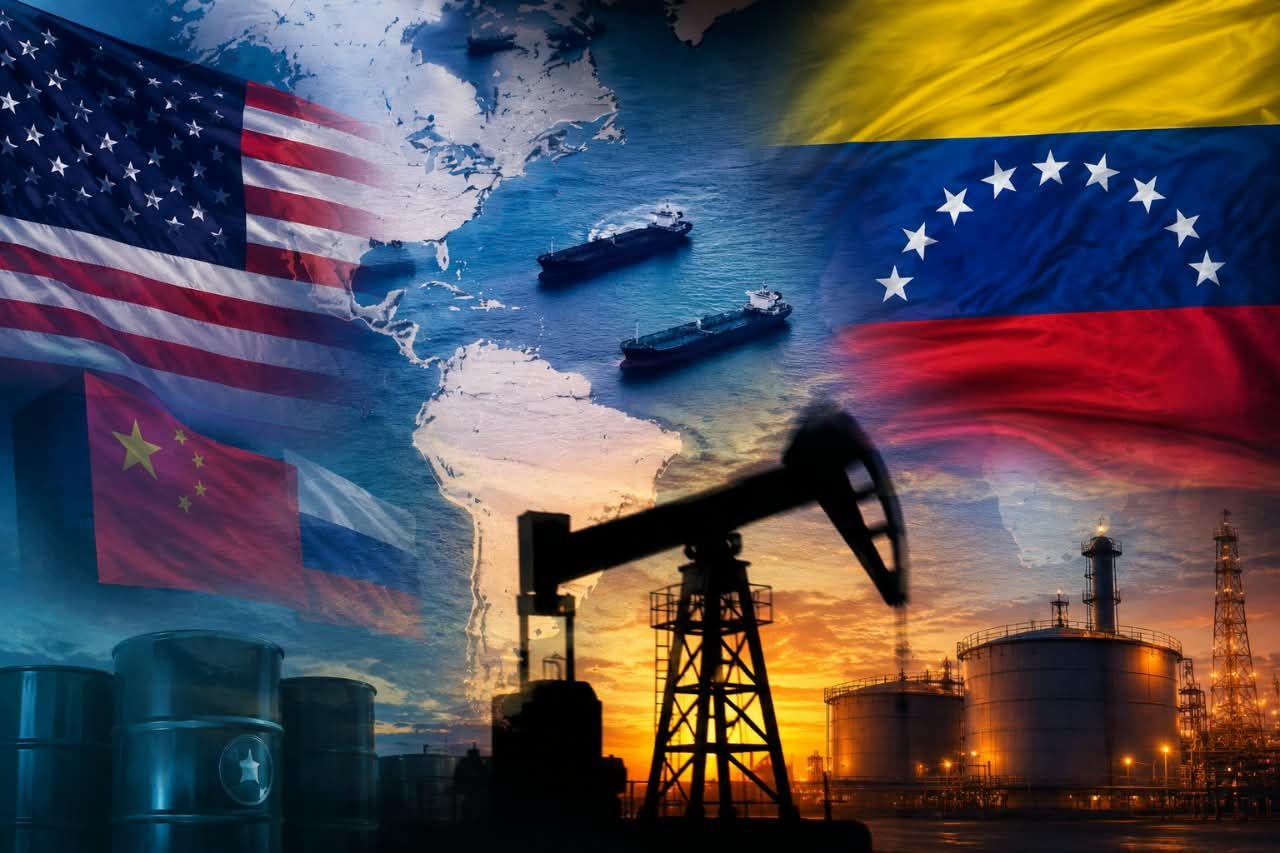
Late summer handed the oil market something it hadn't seen in decades. Washington and Caracas signed an energy agreement that can seriously change the balance of power in the global oil market. In practice, its implications stretch far beyond production figures and corporate profits.
It could reshape who has influence over Venezuelan oil, weaken the position of China and Russia, and give Washington a new source of leverage in a global market already being strained by wars, sanctions and insecure shipping routes. At the heart of the agreement is a long-term development plan involving North American Blue Energy Partners (NABEP), which has reportedly been granted a 100-year framework to develop 17 Venezuelan oil fields. The Venezuelan government expects these projects to generate more than $209 billion in tax revenues, while private operators are expected to play a major role in increasing production.
The terms secured by the US side are unusual even by the standards of major international oil agreements. This structure effectively gives Washington direct influence not only over Venezuela’s oil production, but also over where a significant share of that crude will ultimately be sold. There is also an obvious geopolitical dimension to the agreement.
Of the 14 new NABEP contracts, several relate to fields previously handled by Chinese companies, including Sinopec and China National Petroleum Corporation, and one of the fields was managed by a Russian entity. Thus, Washington is not just gaining access to Venezuelan reserves - it is simultaneously displacing China and Russia from a number of strategically important oil projects. Energy Secretary Chris Wright told CNBC that Venezuelan output could clear 1.5 million barrels per day in the first half of next year.
Today the country pumps about 1.25 million. That gap between what Venezuela has and what Venezuela produces is the whole story in one line. Years of underinvestment, mismanagement and sanctions turned a petro-superpower into an underperformer.
For the United States, greater access to Venezuelan oil could provide a new source of supply at a time when global energy markets are under growing pressure. The agreement could also give Washington another card to play in its dealings with OPEC and its production and pricing policies. If Venezuela eventually reduces its dependence on OPEC or even considers leaving the organization, the impact could be felt across the wider oil market.
Extract — continue reading at the source.