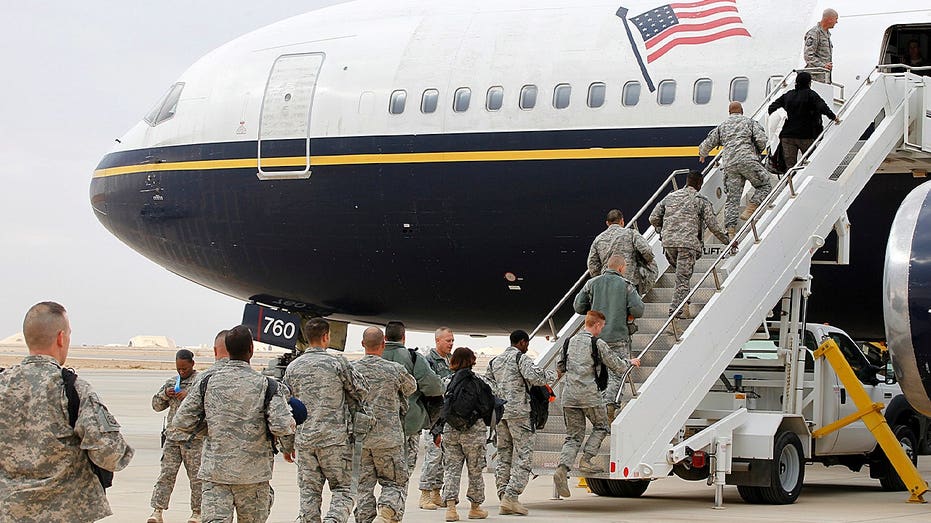
The U.S. military is scheduled to end its mission in Iraq on Wednesday, bringing to a close a military operation that has lasted more than two decades — despite an ongoing war in Iran sparked earlier this year. The Iraq mission began with the 2003 invasion that toppled Saddam Hussein and later evolved into a campaign to help Iraqi forces defeat the Islamic State group after the terrorist organization's rapid rise across Iraq and Syria. In recent years, however, the remaining U.S. military presence has increasingly served as both a counterweight to Iran's influence and a frequent target of Iran-backed militias.
The Iraq agreement was reached before the U.S. and Iran entered direct conflict earlier this year and under a different administration and military leadership — leaving the final phase of the withdrawal to unfold in a dramatically different security environment than the one envisioned when the timeline was negotiated. TRUMP REVEALS WHEN US MILITARY WILL LEAVE IRAQ AFTER 23-YEAR MISSION The deadline stems from an agreement reached by Washington and Baghdad in 2024 under President Joe Biden to wind down the U.S.-led coalition's military mission after Iraqi officials concluded their security forces were increasingly capable of handling the fight against ISIS. It follows the U.S. military's 2021 departure from Afghanistan, also under the Biden administration, which ended another two-decade American war and left no U.S. troops in the country.
The withdrawal, however, was chaotic, widely viewed as 'botched' and resulted in the deaths of 13 U.S. service members and dozens of civilians. HOW IRAN ATTACKS ARE FORCING THE PENTAGON TO RETHINK ITS DECADES-OLD MIDDLE EAST BASE STRATEGY The Pentagon declined to confirm to Fox News Digital whether the timeline remains on track or provide details about any continuing U.S. military involvement in Iraq after Wednesday. The Iraqi Embassy did not return Fox News Digital's request for comment.
The danger to U.S. forces persisted through the final months of the mission. Michael Emmanuel Swinton, 30, was killed at Erbil Air Base in July during the controlled detonation of a downed Iranian attack drone. About 2,500 U.S. troops had remained in Iraq as part of Operation Inherent Resolve, the U.S.-led coalition established in 2014 after ISIS seized large swaths of Iraq and Syria.
American forces had previously withdrawn from Iraq in 2011 before returning three years later to help Iraqi and partner forces combat the terrorist group. That threat has since diminished significantly. The Defense Intelligence Agency (DIA) assessed this summer that ISIS in Iraq "almost certainly remains severely degraded," focused largely on its own survival and unable to capitalize on instability from the war with Iran, according to the latest Lead Inspector General report on Operation Inherent Resolve.
Brad Cooper told lawmakers in May that ISIS attacks in Iraq and Syria had fallen 70% since 2023 and were at their lowest level since 2013. The U.S. mission had already shifted accordingly. Rather than routinely fighting alongside Iraqi forces, American troops increasingly trained, advised and provided intelligence to local forces expected to carry out counterterrorism operations with limited or no direct U.S. involvement.
Extract — continue reading at the source.