This article has been reviewed according to Science X's editorial process and policies. Editors have highlighted the following attributes while ensuring the content's credibility: Bacteriophages—or phages, for short—are viruses that kill bacteria, and scientists have been studying them for decades as a possible solution to antibiotic-resistant infections. But phages are notoriously picky eaters—a phage that can eradicate one bacterial strain is often powerless against others, even if the bacteria are closely related.
This means a phage that works for one patient may be useless for the next. Some phages, however, are exceptions—a rare few do have bigger appetites and can wipe out several different strains of bacteria. Exactly what sets these broader-spectrum phages apart from their picky relatives has remained poorly understood—until now.
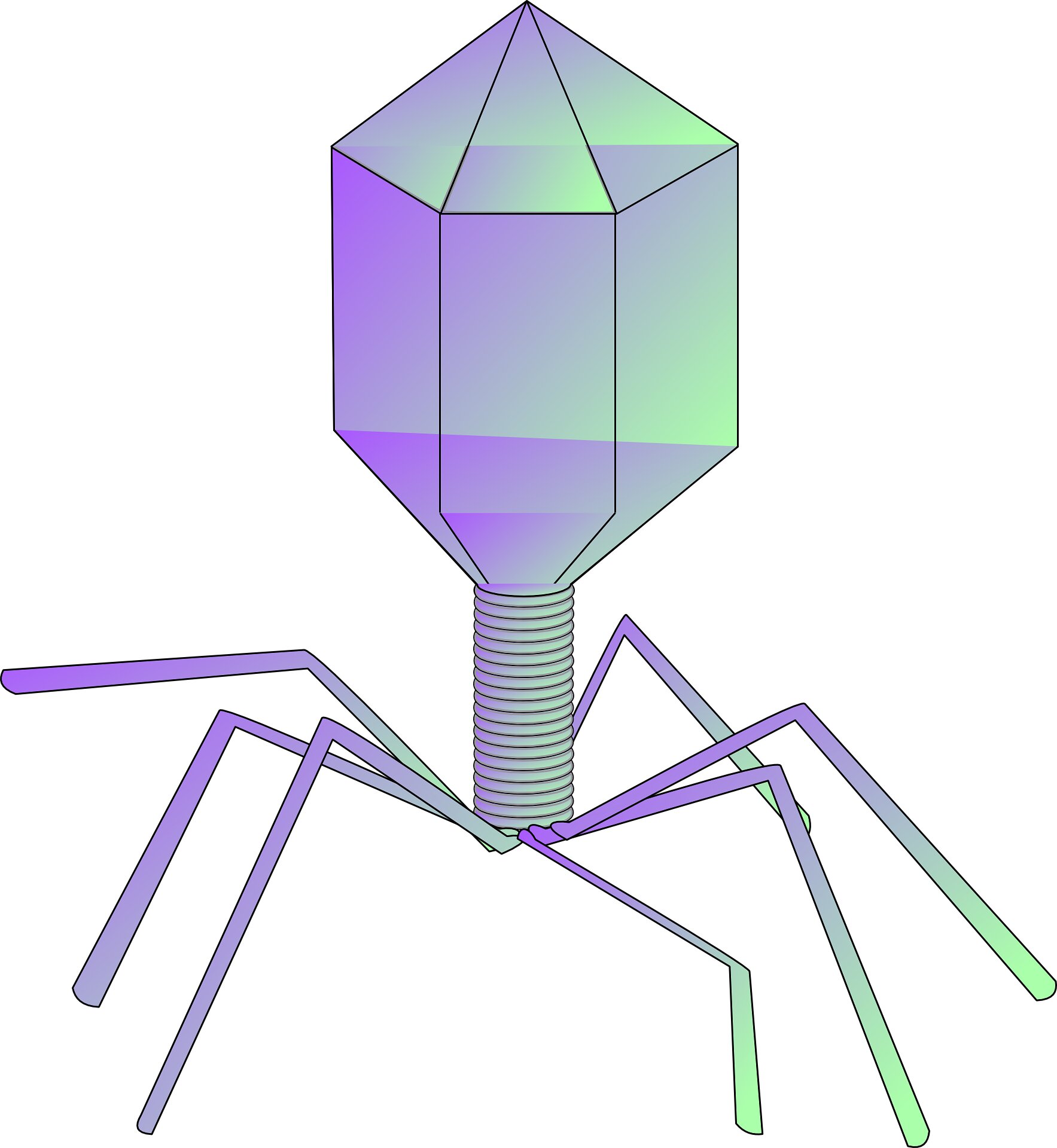
In a new study published in the Proceedings of the National Academy of Sciences, McMaster University researchers have described for the first time a trait shared by several broader-spectrum phages: particular forms of structural diversity in the fibers on their tails. Lori Burrows, professor emerita at McMaster and principal investigator on the new study, says the findings could make it easier to identify or design phage therapies that work against a broader range of bacteria. "Phages use their tails to attach to the bacteria that they infect," she explains.
"By understanding why some phages can do this with only very specific bacterial strains and why others can be more promiscuous, we can focus on the types of phages that may have broader clinical utility." To explore this broader-spectrum activity in phages, researchers in Burrows' lab investigated how they interact with Pseudomonas aeruginosa, a common and often multidrug-resistant bacterium that causes dangerous hospital-acquired infections. Phages infect Pseudomonas by latching onto hairlike appendages on the bacterium's surface, called pili. These pili, which are made from molecular building blocks that Burrows describes as "lollipops," vary in "flavor" across Pseudomonas strains.
In fact, after analyzing genetic data from more than 1,300 unique P. aeruginosa strains, the research team found 53 distinct pili variants. Because phages use these pili to recognize and attach to bacteria, even small differences can determine whether a phage can infect a particular strain. "These variations were concentrated almost entirely on the part of the pili that phages interact with," says Burrows, whose lab is based at the Michael G.
DeGroote Institute for Infectious Disease Research. "This suggests that the bacteria have, over time, evolved different pili flavors to avoid their local phage populations." The team tested a panel of phages—including Cootes and Leland, phages Burrows' lab named after roads near McMaster—against these different strains of P. aeruginosa and observed two distinct behaviors: Some phages were highly sensitive to even minor changes in pili, losing the ability to infect the bacteria, while others could tolerate large differences in pili, remaining infectious where more selective phages could not. "We wanted to understand why some phages can tolerate variation in the bacterial structures they attach to while others are much more sensitive," says Ikram Qaderi, a Ph.D. candidate in Burrows' lab and first author of the new study.
Extract — continue reading at the source.


