Cammarata’s claim is that LLMs might in fact be far easier to understand—and thus to monitor and control—than people previously thought. If true (and we’ll come back to that), it’s a huge deal. After a summer filled with revelations that swarms of agents built by top firms like OpenAI and Anthropic have been breaking their containment and causing havoc on the public internet—often while those companies weren’t aware of what their agents were up to—the AI industry is desperate to get a better handle on the technology it has built.
That’s one reason the blog post landed with such force. What Cammarata has shared is little more than a hunch, says Chris Potts at Stanford University, who leads a team that is trying to understand how LLMs work. He says he was surprised by the response: “I didn’t expect people to update [their beliefs about AI] quite as much as they did.” “I just really enjoy looking at neural networks,” he says.
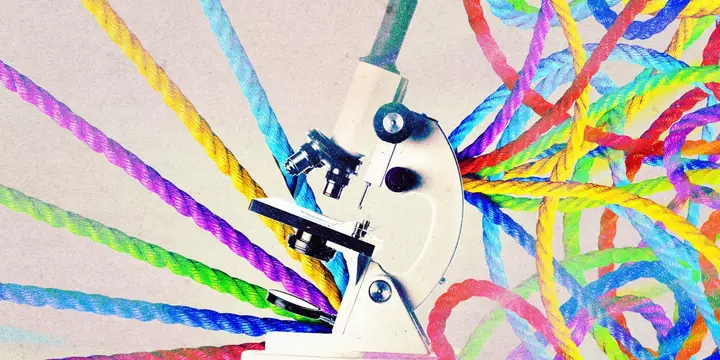
And after looking a lot, I have a hopeful story.” It has long been accepted that the mechanisms inside neural networks, the software that underpins most AI models, are very hard—perhaps impossible—to unpick fully. That’s because when the networks are trained, they appear to take on weird, tangled structures that make no sense to a human. Researchers like to say today’s AI is grown like a garden, not built like a bridge.
Cammarata has done more than most to establish that view. He previously worked at OpenAI, where he helped pioneer techniques that allowed researchers to peer inside models, including tools that can probe individual neurons to see what they represent. It’s a little like how neuroscientists use MRI to study brains. (MIT Technology Review chose this approach, known as mechanistic interpretability, as one of its 10 hottest technologies of 2025.) Back in 2020, Cammarata and his colleagues were studying a small image-recognition model called Inception v1.
When they looked at its neurons, it seemed to be using them to capture multiple things at once. For example, they found that one neuron responded to both images of cars and images of cats. The researchers concluded that the model was getting at least some of its neurons to multitask, perhaps so that it could fit in more data.
Looking at other models appeared to back this up. The phenomenon became known as superposition: Models folded unrelated concepts into single neurons. The upshot was clear: When you looked inside a model, what you saw was a vast, tangled knot.
Extract — continue reading at the source.