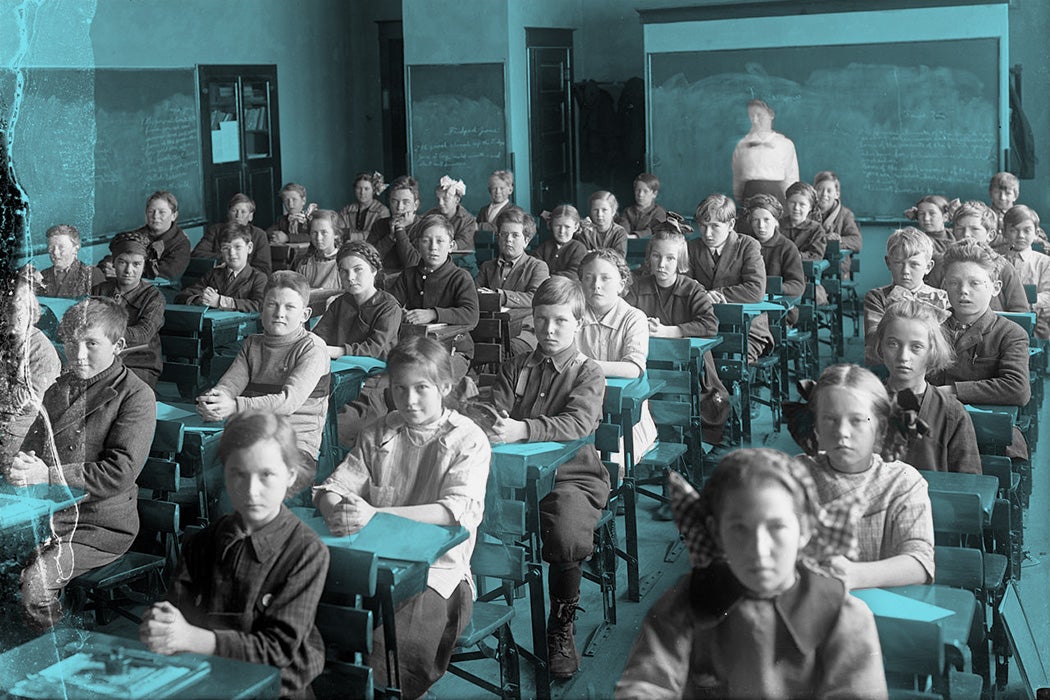
For more than a century, Americans have commonly asked how public schools could do a better job of teaching people to be good citizens. One early stab at the question came from S. Forman, an early advocate for civics education.
Writing in 1903, he noted that it was no surprise things hadn’t been ironed out yet, since the word civics “is only about fifteen years old and the thing is even younger.” In marked contrast to today’s focus on school as training for future employment, Forman wrote that “we are told in season and out of season” that training for good citizenship “is the chief function of the school.” Forman argued that civics should begin by encouraging students to “think as much as possible about democracy.” This included understanding the history of democratic ideas and practical governance, as well as the need to protect minority groups and the dangers posed by demagogues. Along with understanding the “spirit” of democracy, he wrote, students should understand its principles, including federalism, checks and balances, and civil liberty. He also noted the need to teach how the US government is organized, including the workings of various bodies at the local, state, and national levels.
However, he argued that the civics classes of his time were altogether too focused on the mechanical aspects of governance, much to the dismay of students. He suggested that this was a mistake and that it’s crucial for students to understand the topics that will come before them as voters. He praised one high school teacher he had watched present a lesson on tariffs.
At the time, this was a key issue in a presidential election. While the class was divided between protectionists and free-traders, the teacher gave no indication of his own views, and the textbook presented objective facts along with arguments from both sides. The point, Forman suggested, was not to change anyone’s mind but to encourage better understanding and clearer thinking.
Finally, Forman argued that civics must touch on ethics, but without leaning on religious arguments inappropriate for the classroom. Instead, he viewed teachers’ own moral values, conduct, and character as key to presenting students with a model of decency.
Extract — continue reading at the source.