President Donald Trump spent years bullying Europe into taking responsibility for its own security. If only he’d started a war there, he could’ve saved himself a lot of trouble. Within months of the White House authorizing mass strikes against Iran and dragging the United States into another Middle Eastern conflict from which there is no simple escape, regional powers Turkey, Saudi Arabia and nuclear-armed Pakistan announced they’d struck a brand-new defense pact.
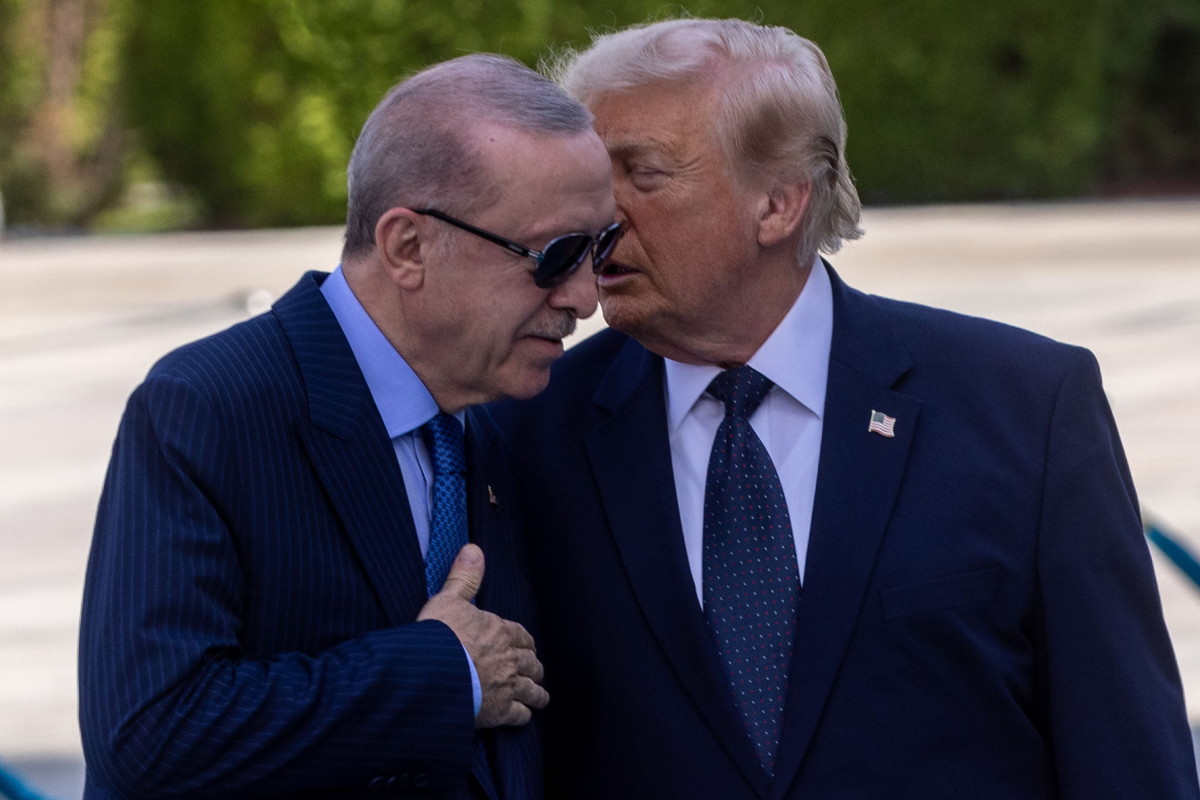
Trump on Sunday praised the agreement, described by Turkish Foreign Minister Hakan Fidan as “technically” the same as NATO’s mutual defense principle, on Truth Social. He told Trump to “make the utmost use of diplomacy” to end the conflict, and added that Turkey will take a “strong stance on ensuring regional stability and security” via their new defense pact. It's a sign of things to come.
War in Iran has shown key Middle Eastern powers they can no longer rely solely on the U.S. to guarantee their security and are taking matters into their own hands. Before long, Washington may discover that a Middle East less dependent on American protection is also one less susceptible to American pressure. The Mecca Joint Defence Agreement, signed at Islam’s holiest city on August 7 by Erdogan, Saudi Crown Prince Mohammed bin Salman and Pakistani Prime Minister Shehbaz Sharif, is by no means as robust as the North Atlantic Treaty that underpins NATO.
Its headline provision is unmistakably NATO-like: an armed attack against one of the three states will be considered an attack against all. But almost everything else remains under construction. Fidan said members would need to take “very humble but concrete steps” to nail down the agreement's limits and decide through consultation what kind of support an attack would actually trigger.
A ministerial committee and Saudi-based secretariat are planned, but operational details remain scant. Other countries may be invited to join the pact, but Egypt, the obvious first choice given its close ties with all three signatories as part of the informal “Sunni Diamond," has not yet expressed interest. That said, the agreement carries real potential, as each state brings something unique to the table.
Saudi Arabia boasts a huge economy thanks to its oil wealth, along with broad political and commercial influence. Pakistan fields an enormous military and is the only member of the trio with nuclear weapons. And Turkey, besides having the largest military in NATO apart from the U.S., is also home to one of the world’s most advanced defense industries.
Extract — continue reading at the source.