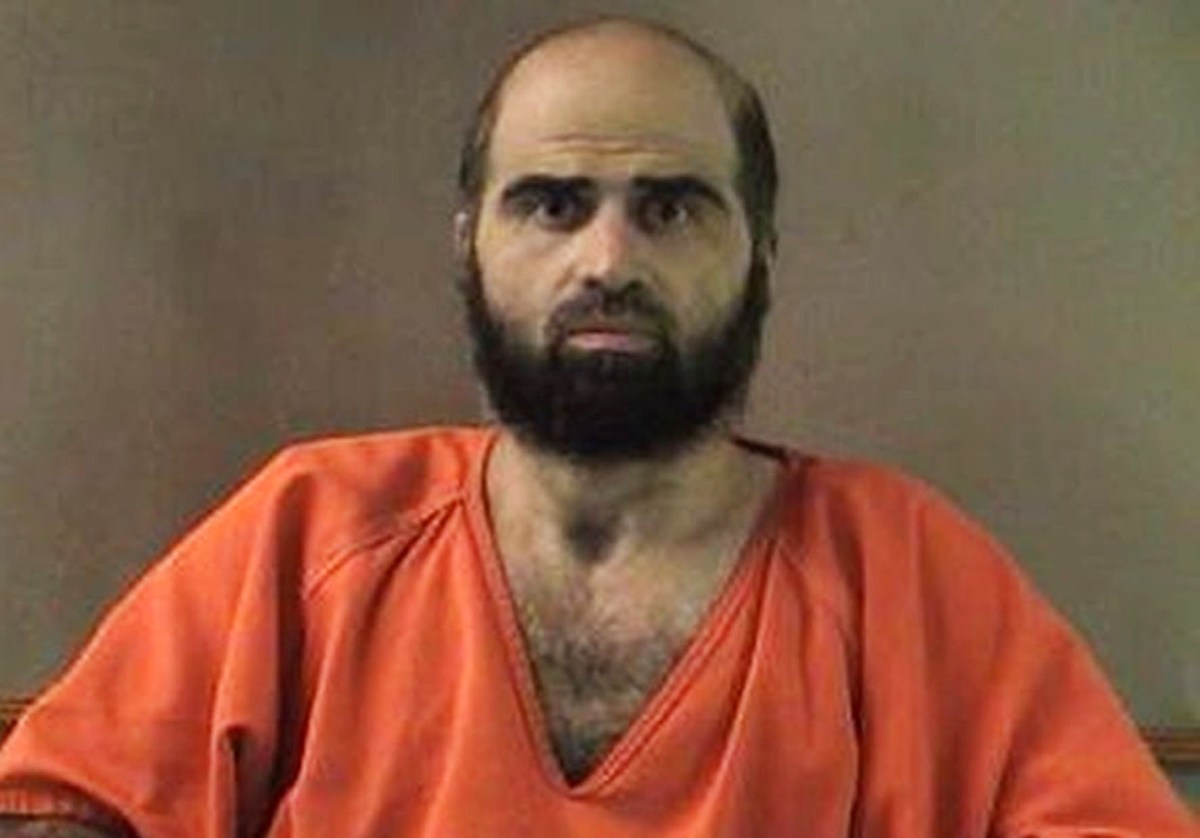
President Donald Trump on Monday approved the execution of former Army Major Nidal Malik Hasan, the military psychiatrist convicted of carrying out the 2009 mass shooting at Fort Hood, Texas, one of the deadliest attacks ever on a U.S. military installation. The Pentagon said Hasan is to be executed by firing squad, a rare method that would make him the first military prisoner executed since 1961. Trump's approval moves the case into the next stage of the military death penalty process, though further litigation in civilian federal court could still delay the execution.
The decision comes days after a failed attempt to execute Tennessee death-row inmate Christa Pike by lethal injection renewed scrutiny of execution procedures and prompted Governor Bill Lee to halt the state's remaining executions this year. The decision has also renewed attention on Hasan, whose November 5, 2009, attack left 13 people dead and more than 30 others wounded at what is now Fort Cavazos, then known as Fort Hood. Hasan, an Army psychiatrist, was sentenced to death in 2013 after admitting he carried out the attack.
Prosecutors described the shooting as an act of terrorism inspired by extremist Islamist beliefs. Born and raised in Virginia to parents who emigrated from a Palestinian town near Jerusalem, Hasan joined the Army after high school and attended medical school through a military scholarship program. He later trained as a psychiatrist and worked at Walter Reed Army Medical Center, where he treated service members returning from combat deployments in Iraq and Afghanistan.
Those who knew Hasan before the attack often described him as quiet, religious and intensely private. Former colleagues and relatives later described him as increasingly troubled by the wars in Iraq and Afghanistan and unhappy about the possibility of a deployment overseas. His cousin, Nader Hasan, described a deployment as "probably his worst nightmare." Military supervisors reportedly documented professional difficulties before the shooting.
The reported at the time that Hasan received a poor performance evaluation while working at Walter Reed and required additional counseling and supervision. Investigators also examined online postings attributed to someone using Hasan's name that appeared to justify violence committed in defense of Muslims, though officials never conclusively established that he wrote the messages. On November 5, 2009, Hasan entered a processing center at Fort Hood where soldiers were preparing for deployment.
Witnesses said he shouted "Allahu Akbar," Arabic for "God is great," before opening fire with a laser-sighted handgun. Thirteen people were killed and more than 30 others wounded in the attack, making it one of the deadliest shootings ever carried out on a U.S. military base. Hasan was shot by civilian police officers responding to the scene but survived.
Extract — continue reading at the source.