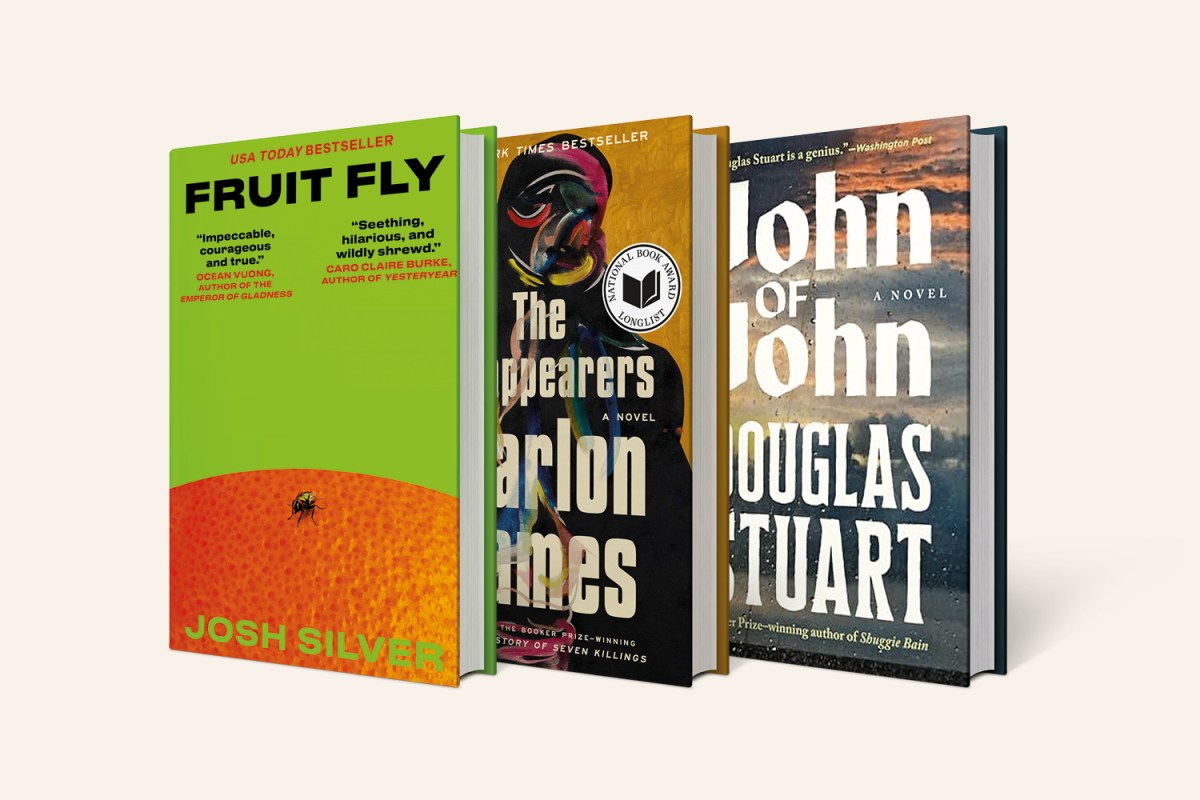
"These two authors are like my heroes," Silver told Newsweek’s Parting Shot podcast, about James and Stuart. "To be included in any kind of conversation with those two is mind-blowing, to be honest." For Silver, who just turned 37, the moment is personal. "When I was 17 and looking for books with queer leads and not really finding anything, [I was] sneaking downstairs to watch Queer as Folk because I couldn't find any sort of queer representation in media," he said.
"And now being part of this, what an incredible shift." "In the U.S., this book had no marketing budget, and it had no real strategy, let's be honest," Silver said. Instead, online book communities carried it into readers' hands, and those readers aren't only coming "from the gay community or the queer community, but straight people, too." "It feels really great that it can happen if you don't have that kind of thing [marketing support]," he said. While the book world has long been where marginalized voices and themes have more room to thrive than, say, TV and film, the popularity of so many queer stories at once feels singular.
That is an achievement, of course, but for Silver, how the market will respond to a queer character isn't his concern. He's more focused on the story he needs to tell. "I just wanted to write this book," he said of making the jump from YA to his first adult novel.
He previously wrote HappyHead and Traumaland. "It didn't feel like I was strategically planning to shift demographics or market." That story has been a long time coming. Silver, who is from Manchester, England, started out as an actor and said he was told early on that being openly gay would hurt his career, only to watch the industry reverse course years later, as long as he was "a version of gay that they want." Between that and his heavy drinking at the time, he said, "the wheels were falling off my life." He left acting, retrained as a nurseand began writing YA novels.
Kuang's Yellowface and Percival Everett's Erasure stirred up something he couldn't ignore. "Corporations, people capitalize off difference, and they capitalize off pain and they don't give a sh**,” he said. Silver never felt pressure to soften what came out in his work.
"I wasn't censored in any way by my publisher," he said of Oneworld, which first published the book in the U.K. "I never felt the need to make it less gay, more gay, a version of gay." However, this moment isn't a total surprise, especially after Rachel Reid's novel Heated Rivalry became a viral TV hit. But even the MM romance genre, it belongs to, which focuses on same-sex male romance and has a fanbase that skews heavily toward women despite its queer themes, isn't without its problems.
Extract — continue reading at the source.