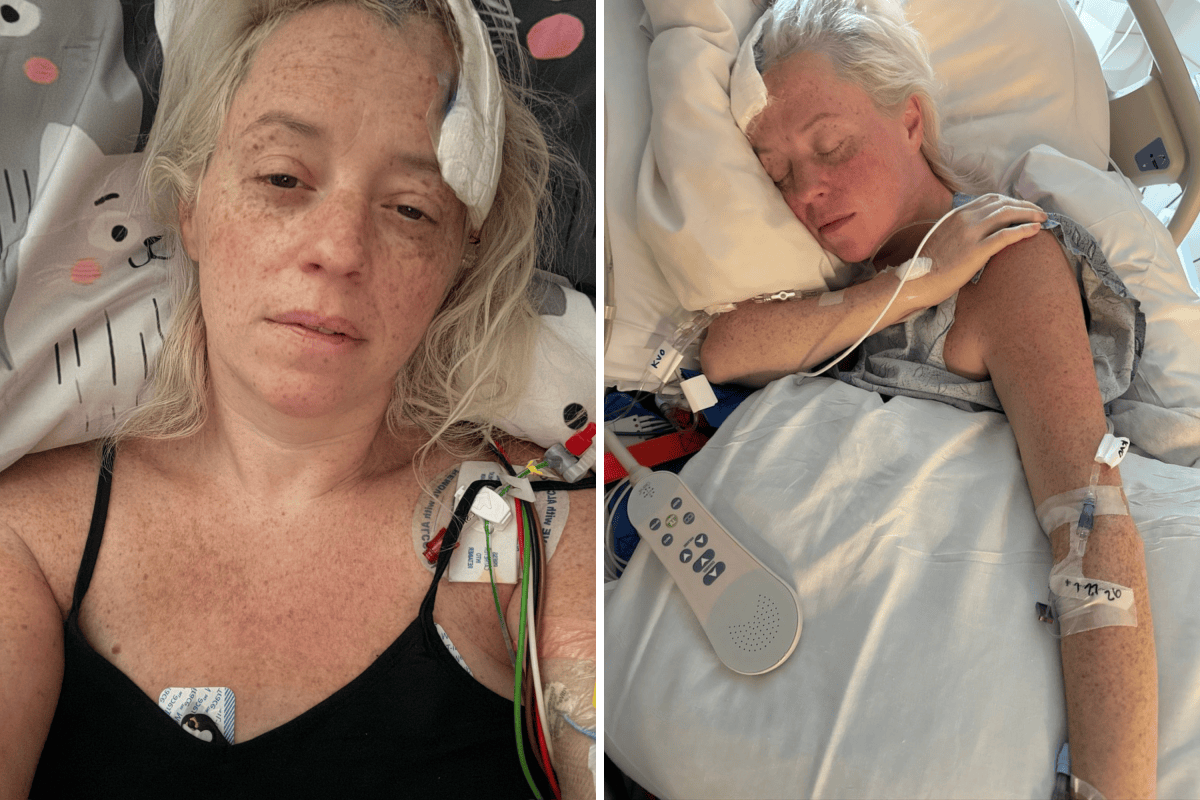
It was just like any other working day when Julie Nashawaty returned home during her lunch break. But the 46-year-old never made it back to work. On July 27, the cat sitter suddenly developed a headache unlike anything she had ever experienced before and felt her body temperature soar.
"Out of nowhere, it felt like my brain was exploding," Nashawaty, from Boston, told Newsweek. As her condition rapidly worsened and she "stopped making sense," her husband called 911. Within 30 minutes, she was in the emergency room.
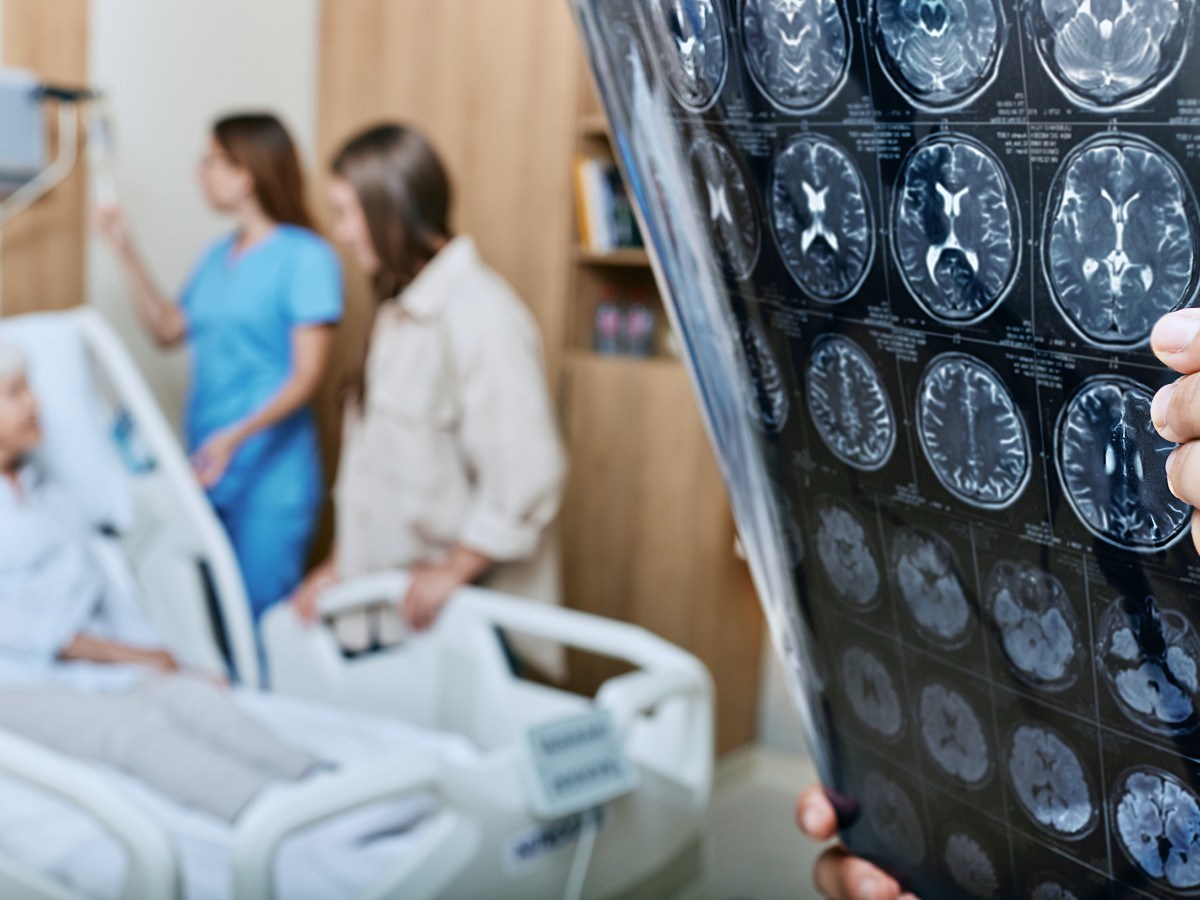
She went on to spend 25 days in intensive care. Doctors discovered that a 3-millimeter brain aneurysm, a weak, bulging spot in a blood vessel in the brain, had ruptured. According to the Brain Aneurysm Foundation (BAF), an estimated 6.8 million people in the United States are living with an unruptured brain aneurysm, while approximately eight per 100,000 people experience a ruptured aneurysm each year.
"I knew something was wrong because it felt like nothing I had ever experienced," Nashawaty said. "I didn't know it was an aneurysm, but the sudden pounding, feeling so hot, and needing to lie on the floor were completely out of the ordinary." A ruptured brain aneurysm is a medical emergency that requires immediate treatment. According to BAF, the symptoms can include: Brain aneurysms often develop without symptoms.
While some people may inherit a tendency toward weaker blood vessels, most aneurysms are thought to form gradually through wear and tear on the arteries over time. BAF notes that several factors can increase the risk of a brain aneurysm, including smoking, high blood pressure, a strong family history of aneurysms, being over 40, certain genetic disorders, drug or excessive alcohol use, infection, and severe head trauma. To treat the ruptured aneurysm, Nashawaty underwent an endovascular procedure.
The treatment involves doctors inserting a catheter through an artery in the arm or groin to either place tiny coils inside the aneurysm or insert a stent to redirect blood flow away from it. "Treating the aneurysm was only the beginning," Nashawaty told Newsweek. "I developed significant vasospasms, meaning blood vessels in my brain were narrowing." She said doctors administered medication through a drain in her head and, on three separate occasions, entered her arteries to deliver medication directly to the affected blood vessels.
Extract — continue reading at the source.