How a single cell becomes a magnificent human brain capable of building airplanes and writing sonatas is “one of the great astonishments of the earth,” wrote physician, and author Lewis Thomas in his 1979 book, The Medusa and the Snail, which won the 1981 National Book Award. But as he considered the lowly origins of this wondrous organ, Thomas had a second thought, which he added in a footnote. With his humble footnote, Thomas may have anticipated a massive new discovery about the nature of the most complex biological structure known to humans: The brain is not one, but two distinct organs, according to a team of neuroscientists from California.
One organ governs primitive functions, such as breathing, sleep, hunger and the beating of our hearts, while the other is responsible for poetry, memory, math, and philosophy. Read more: “Evolution May Be Drunk, But It’s Serious About Making Brains” The findings, which were published today in Nature Neuroscience, may overturn a model of brain development that has dominated the field for decades. They have implications not just for how we understand the evolution of human and animal brains, but how we treat diseases that originate in the brain and perhaps even how we understand intelligence and consciousness.
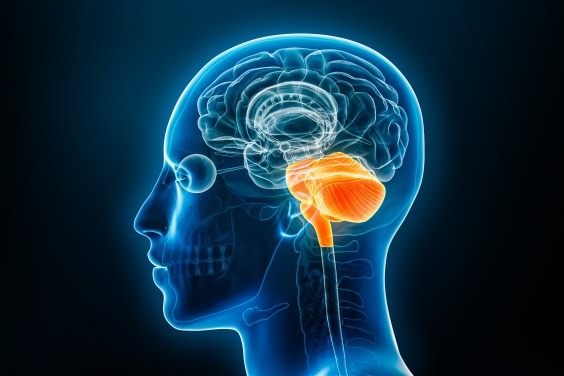
I spoke with study author and Stanford University developmental biologist Kyle Loh, who relayed the passage in Thomas’ book to me, about why evolution might have favored a split brain, what a rooster named Mike without a head can tell us about the brain’s organs, and how the findings may help us better understand human disease and intelligence. Neuroscientists have generally thought of the brain as a single organ until now. The brain comprises the forebrain, the midbrain, and the hindbrain.
And the forebrain does all the fancy stuff—thinking, and so on—while the hindbrain controls the life sustaining functions, which are underappreciated. In 1951 or 1952, this very famous Dutch embryologist called Peter Nieuwkoop proposed that there’s a common progenitor cell for the entire brain. And that intuitively made sense to everyone because the forebrain, midbrain, and hindbrain are all contiguous.
They seem to be like one organ. The lung has two lobes, left and right, but no one would think that the lung comes from two separate origins. It’s clearly just like one organ, right?
It was a bit of a surprise, and quite the uphill battle to get our paper published because it was so widely believed that what we found was not true. In fact, when I gave a talk on this at a conference several years ago, the chair of a developmental biology department at an unnamed institution stood up and said, “This is completely false.” What does it mean to say that the brain is two organs? One could say this is a bit of a triviality, because if you look at any two things at sufficiently high resolution, eventually you will see two different sources.
Extract — continue reading at the source.


/https://tf-cmsv2-smithsonianmag-media.s3.amazonaws.com/filer_public/43/c3/43c31d6b-0041-444c-a2b4-ffe1dfa01db4/gettyimages-2289911756_1.jpg)