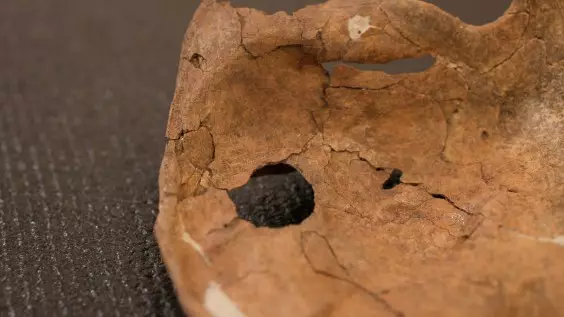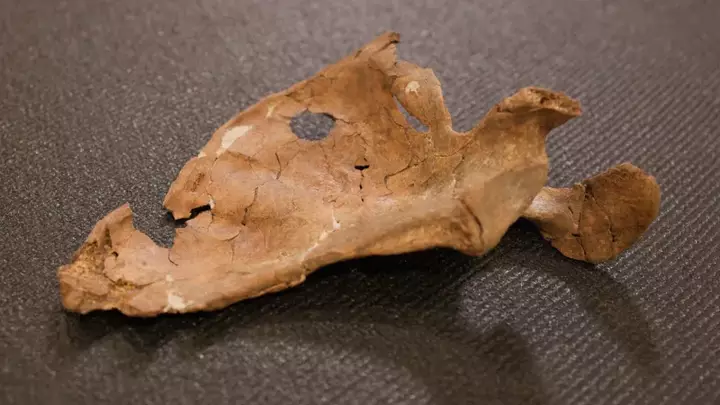
A new set of remains found in modern-day Iraq suggests that one Neandertal probably suffered a devastating blow to the face before dying at the point of a spear many years later. The size and structure of a puncture wound in a shoulder blade suggest that it was made by a wooden spear shortly before or after death, researchers write October 15 in Scientific Reports. But violence isn’t all this Neandertal may have known.
A shattered tooth found with the remains hints that the deceased suffered a facial injury at some point in their life. Surviving this injury indicates that Neandertals may have helped each other in times of need, the study authors speculate. These remains with visible trauma are “super cool,” because “there’s a lot of ways to die that leave absolutely no mark on your skeleton,” says Libby Cowgill, a biological anthropologist at the University of Missouri in Columbia who wasn’t involved with the study.
Neandertals were often injured throughout their lives, probably from hunting. But archaeologists have also uncovered occasional signs that Neandertals and other hominids — modern humans and their extinct cousins — were stabbing and pummeling each other, maybe even intentionally, as far back as 430,000 years ago. Signs of injuries caused by other hominins have included another Neandertal at the same Iraq site whose rib was probably stabbed.
During an excavation that began in 2019 at Shanidar, the famous Neandertal burial site in Iraqi Kurdistan, researchers uncovered remains from at least three previously unknown individuals. The set included ribs, hand bones, teeth and a perforated shoulder bone that probably belonged to a single individual who lived around 75,000 years ago. At first, the team had no idea what caused the hole, says Emma Pomeroy, a biological anthropologist at the University of Cambridge.
The team removed the shoulder blade with the surrounding sediment and tested for evidence that roots or insects had damaged the fossil. But that didn’t fit the nature of the damage. Instead, they found fragments of bone from the shoulder blade in the dirt that suggested it had been pierced when the individual, which the team named Shanidar A, was alive.
The team also didn’t see any signs of healing around the puncture wound when they analyzed the bone under the microscope and using X-rays — suggesting that the injury had occurred around the time of death. The next task was to find out what instrument might have caused the injury. The team compared the puncture with the fossilized remains of butchered animals found alongside human tools, as well as wounds created by archaeologists stabbing animal corpses with re-created Paleolithic weapons.
Extract — continue reading at the source.