Two men are being accused of smuggling after customs officers at Miami International Airport discovered live birds hidden beneath their clothing. When Alberto Hernandez Castillo arrived on a flight from Cuba on October 4, he indicated he did not bring any wildlife into the United States. Customs and Border Protection officers noticed an “unexplained bulge on the front of [his] pelvis/waist area” and thought he seemed “nervous,” according to the court documents, as reported by ABC News’ Clara McMichael and Ivan Pereira.
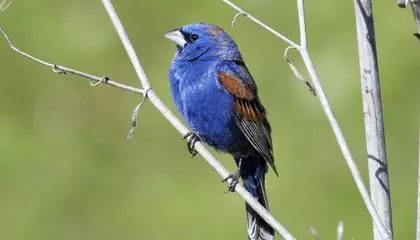
When customs officers searched Hernandez Castillo, 40, they found black pouches sewn into his underwear. Inside, they discovered six plastic tubes holding ten live birds: eight yellow-faced grassquits and two blue grosbeaks. Hernandez Castillo claimed the birds were for “personal use,” then invoked his right to remain silent.
Hernandez does not appear to have applied for or received permission to legally import wildlife into the country, and he was subsequently charged with smuggling. He was released after posting a $25,000 bond. Yellow-faced grassquits are small, grayish-green finches typically found flying in loose flocks in open, grassy fields between southeastern Mexico and northern South America, as well as the Greater Antilles, the group of islands that includes Cuba.
The International Union for Conservation of Nature (IUCN) considers it a species of “least concern,” but it is protected under the U.S. Migratory Bird Treaty Act. Blue grosbeaks are large songbirds with thick, triangular bills found in the southern U.S., Mexico, Central America and the Greater Antilles.
Males are bright blue, while females sport cinnamon-colored plumage. Blue grosbeaks have also been deemed a species of “least concern” by the IUCN but are protected under the Migratory Bird Treaty Act. According to CBS News’ Ana Maria Soler, the two species are often illegally brought into the U.S. and sold for the pet trade or singing competitions.
A post shared by NBC 6 South Florida (@nbc6) Two days later, on October 6, 41-year-old Roberto Perez Quincosa arrived at Miami International Airport on a flight from Havana. Customs officers discovered 11 birds on his body: six Cuban melodious finches and five Cuban bullfinches. Perez Quincosa had used hair roller tubes “with holes along their length and capped with netting material” to transport the birds in a belt-like garment, according to the criminal complaint, as reported by the New York Times’ Rebecca Chao.
Extract — continue reading at the source.