Wildlife officials in Australia are taking a hands-on approach to combating the deadly and highly contagious bird flu strain H5N1. Veterinarians and biologists have just begun a multi-week pilot project to capture and vaccinate shy albatrosses on a remote Tasmanian island. So far, the albatrosses have remained healthy and free from the virus.
However, the avian flu recently reached Tasmania for the first time, and it has sickened dozens of birds from other species since then. Wildlife experts consider the shy albatross highly vulnerable to the H5N1 strain, so they’re taking steps to protect them. Officials hope the results of the pilot project will inform their broader efforts to combat the avian influenza “at a population level” in the species, Sheryl Hamilton, a wildlife biologist with Tasmania’s Department of Natural Resources and Environment, tells Kelsey Reid of the Australian Broadcasting Corporation (ABC).
The shy albatross is a large seabird that breeds on three islets in the Bass Strait between the Australian mainland and the island state of Tasmania: Albatross Island, Mewstone and Pedra Branca. They’re considered “near threatened” by the International Union for Conservation of Nature and “vulnerable” in Tasmania. The total population includes an estimated 15,000 breeding pairs.
If all goes to plan, officials hope to vaccinate up to 100 shy albatrosses on Albatross Island, giving each bird two doses of the vaccine. Afterward, they plan to keep an eye on the birds using remote cameras and follow-up visits to see how they respond. The process is labor-intensive.
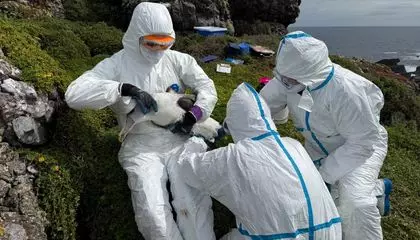
Wearing head-to-toe hazmat suits, wildlife biologists pick up each bird by hand, weigh it and administer the first dose of the vaccine. They then mark the birds with temporary, nontoxic paint and place numbered markers at their nests to keep track of which individuals are part of the project. They plan to return in a few weeks to administer the second dose.
Vaccinating wild birds is difficult because they’re hard to catch and constantly on the move, making it challenging to recapture them for a second dose. However, shy albatrosses provide a “unique opportunity,” since they can be safely approached multiple times while nesting and monitored “in a way that’s not possible for many wild species,” Guy Barnett, the Tasmanian minister for environment and climate change, says in a statement. Veterinarians have also been vaccinating little penguins against the bird flu on Phillip Island and St Kilda beach in Victoria, Australia.
Extract — continue reading at the source.