I magine pulling away from a stop sign on a busy street after looking left and right, but not looking left again. A fast SUV coming from the left T-bones your car. In all likelihood, the car is totaled — but somehow, you are not.
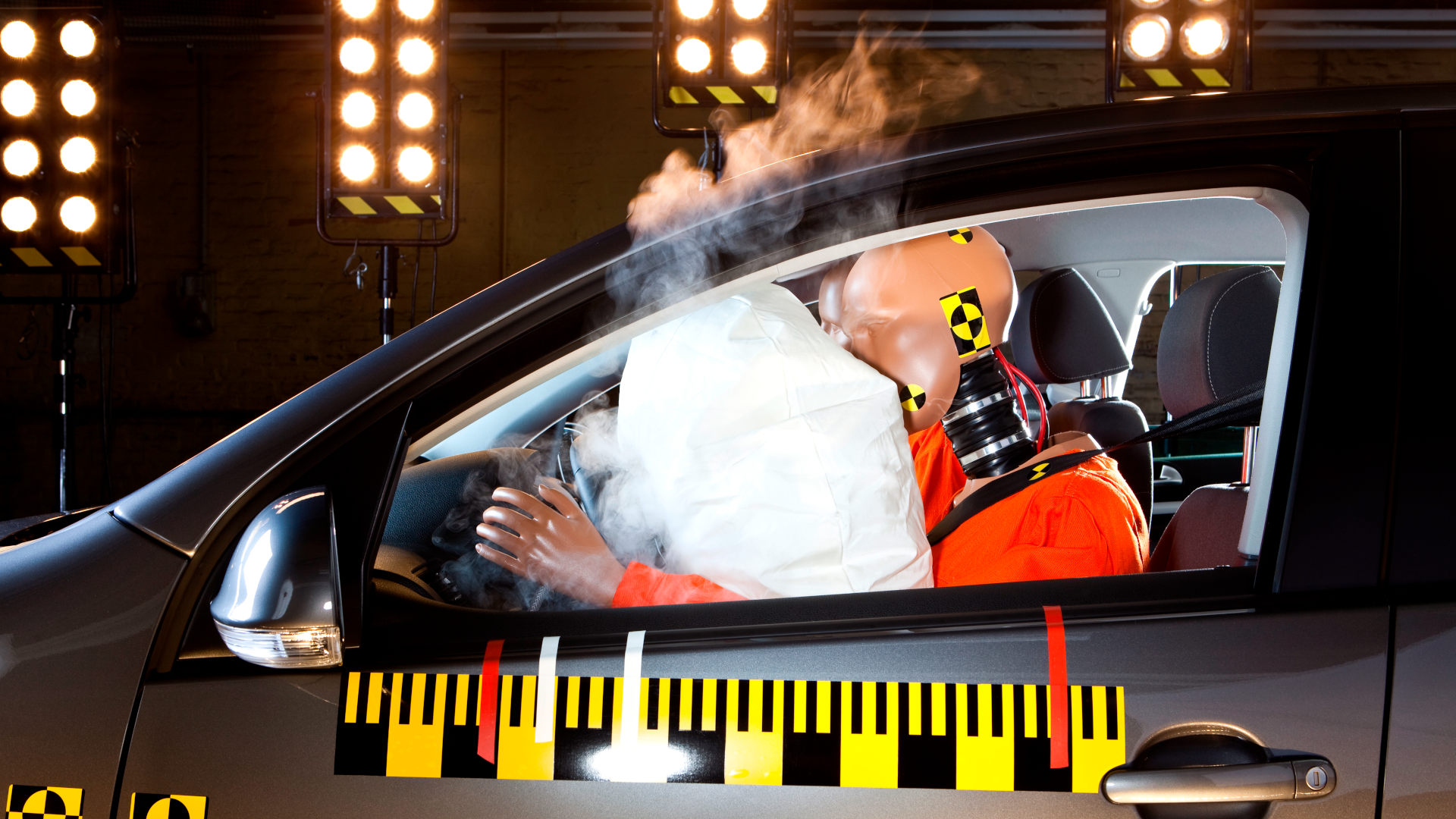
You may be covered in pebbles of windshield glass and covered by a deflated airbag, but you have remained solidly on this mortal coil. Your life was saved by engineering, science, and determined nerdery: that airbag and other safety features designed into the car, as well as decades of testing with crash dummies and with side-impact testing that involved smashing a roughly 3,000-pound block of aluminum on a cart into a car at 33.5 miles per hour. On top of that, there are the regulations and industry standards that required it all.
BOOK REVIEW**—**“Kobuk the Destroyer: And Other Tales from the Wild, Unseen World of Test Engineering,” by Alex Davies (W. Norton & Company, 272 pages). Anyone who has survived such a moment — or, for that matter, has used a toaster or cursed at a child-resistant cap on a pill bottle — will find much to enjoy in “Kobuk the Destroyer: And Other Tales from the Wild, Unseen World of Test Engineering.” The author, Alex Davies, pulls together the wild derring-do of the field’s pioneers and the methodical development of statistical methods to ensure the safety and quality of just about everything we buy and depend on.
Davies, a technology and transportation journalist and the author of the 2021 book “Driven: The Race to Create the Autonomous Car,” is an amiable companion on this journey through what could be a technical slog. (He is currently a senior editor at Salesforce.) He doesn’t totally skip the slog, however — the book wouldn’t be complete without detailed discussion of regulation, statistical sampling, the factor of safety, and processes like Hazard Analysis Critical Control Point, a system that keeps food from killing us much more often than it already does. So some passages can be dense. But Davies aims for sprightly, and more often than not gets there.
The book opens with the Kobuk of the title. Kobuk, who died in 2017, was a grizzly bear who lived at the Grizzly & Wolf Discovery Center, a sanctuary in Montana, ever since a land owner killed his mother and brother for eating his chickens. During his career at the center, he and other “problem bears” earned their keep by testing products like bear-proof trash cans and camping food canisters under the auspices of something called the “Interagency Grizzly Bear Committee,” a collaboration of state and federal agencies seeking to protect bear populations and habitats. > Davies is trying to right a societal oversight: Not all heroes wear capes.
Some of them wear pocket protectors. The bear program, which began in the 2000s, replaced more conventional efforts: The committee dropped weights on cans and coolers from a set height, some of them bearing spikes that imitated the action of a tooth. Mayhem ensues: A cooler or trash can may be flipped, warped or gouged, or get the “CPR technique,” when a bear stands on its hind legs and pumps up and down on the product with its front paws.
Extract — continue reading at the source.