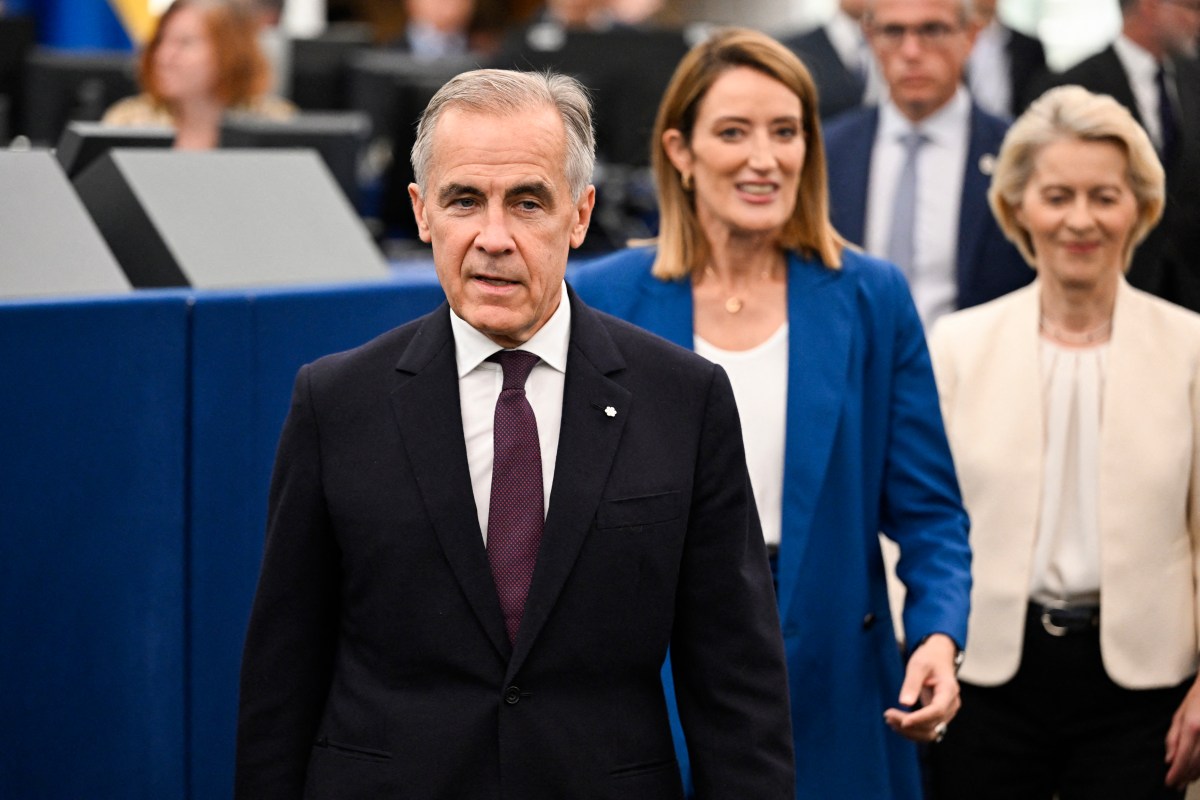
Canadian Prime Minister Mark Carney spent the past year arguing that Canada should stop taking orders from Washington and start building its own alliances. This week, Europe answered him directly with an open invitation that many see as a direct rebuke to President Donald Trump's handling of America's closest neighbor. European Commission President Ursula von der Leyen proposed making Canada the European Union's first associate member, a status that doesn't exist yet, with no rulebook for how it would work.
"Above all, dear Mark, Europe and Canada believe in democracy," von der Leyen said to Carney, who received a standing ovation at the European Parliament in Strasbourg. Ottawa was reportedly exploring ties with the EU that could stop just short of membership, but von der Leyen's offer became the clearest signal yet that something was in the works. An official who spoke with The said Canada would seek an arrangement allowing its citizens to live and work in Europe without visas as part of a broader strategic partnership.
None of this happened in a vacuum. It followed months of tariffs, threats and a president who has openly floated absorbing Canada as a 51st state. Todd Belt, a professor of political management at George Washington University, thinks the White House never saw any of it coming.
"Donald Trump underestimated Carney's resolve," he told Newsweek. "He probably thought that since he was new in office, he would be able to boss him around. And that didn't happen." Belt says Trump also failed to anticipate the shape retaliation would take.
"The Canadians would respond in kind, and they would do so in a fashion where they deliberately targeted Senate toss-up seats," he said, referring to states like Michigan, Ohio and Alaska. Washington's biggest trade weapon starts to lose its edge the moment Canada can replace what it loses from the U.S. with new partners elsewhere, according to Belt. "If you disentangle yourself from your primary trade partner and you are able to replace the trade partner with other new trade partners, then that former trade partner has very little leverage." Jovita Neliupšienė, the EU's ambassador to the United States, framed the door as open but the outcome as undecided.
Asked whether other countries might be offered similar status, she was careful to draw a distinction. "It's not a joining," she told Newsweek. "Association is not joining.
Extract — continue reading at the source.