A suspected Iran-aligned Iraqi militia attack against Saudi Arabia's East-West pipeline has cut into a crucial oil artery serving as a bypass for disrupted Strait of Hormuz traffic in yet another challenge to the global energy order. That's not just a challenge for the Kingdom, which is now surrounded on multiple fronts by Iran and its Axis of Resistance, but also U.S. consumers who are set to take another hit at home in the U.S.-Israeli war with the Islamic Republic. "The East-West pipeline has been a godsend for Saudi Arabia and a key piece of infrastructure that’s kept fuel prices much lower than they would be otherwise," Jim Krane, fellow in Middle East Energy Studies and co-director of the Middle East Energy Roundtable at Rice University’s Baker Institute for Public Policy, told Newsweek.
"So, it’s a serious problem for the world—U.S. drivers included—if the East-West Pipeline is closed, and even worse if the Strait of Hormuz is also closed," Krane said. More problematic still, Iran's leverage on maritime chokepoints—including the Strait of Hormuz and potentially the Bab el-Mandeb, whose eastern flank was recently secured by Tehran's Yemeni ally, Ansar Allah, also known as the Houthis—means it may get to decide what comes next. "The ball is in Iran’s court right now," Krane said.
"Will it continue blocking Hormuz for maximum pain in oil markets? Or will it look the other way, even temporarily, while the repairs are done? The outage gives Iran a short burst of extra leverage." The disruption to the East-West pipeline, reportedly the result of an attack launched last Friday from Iraq, "is reducing the flow of Saudi oil by roughly seven million barrels a day to the market," Ed Hirs, lecturer specializing in economics and energy at the University of Houston, told Newsweek, referencing the pipeline's maximum reported capacity.
He placed the price elasticity of demand for oil at roughly -0.047, meaning that a 1 percent drop in the oil market would lead to a price hike of around 25 percent. Back in January, the price of oil was around $56 per barrel. After the U.S. and Israel launched their war on Iran late the following month, the Islamic Republic's blockade of the Strait of Hormuz disrupted around 10 million barrels per day out of the market, with around an additional 1.5–2 million barrels of liquid hydrocarbons disrupted due to Iranian attacks that caused extensive damage to Qatar's LNG facilities.
U.S. releases from the Strategic Petroleum Reserve have amounted to around one million barrels per day, but the planned 172-million-barrel release announced in March is nearing completion with no further commitments. Multinational releases coordinated by the International Energy Agency, which have amounted to around 400 million barrels in total, are also approaching their limit. Some relief is coming from reduced Chinese imports and increased oil flows from Venezuela, Guyana, Kazakhstan and the United Arab Emirates, but Hirs calculated that today, "we're roughly a couple of million barrels a day short, which gets us, using the price elasticity of demand, up to around $100-plus a barrel." Refined products are especially vulnerable.
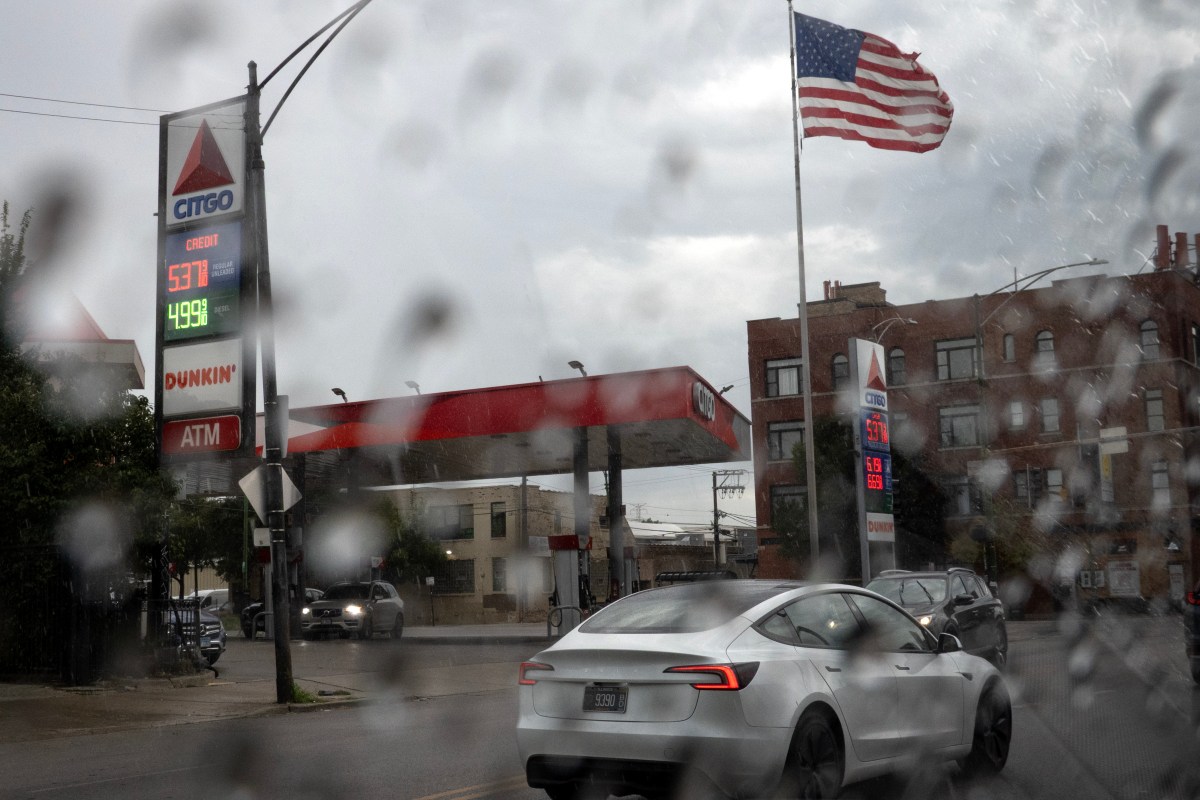
For example, diesel has been trading between $175 and $190 per barrel and recently spiked to $200 per barrel, or roughly $5 per gallon, a trend Hirs said could be partially attributed to ExxonMobil chartering two tankers to export gasoline and diesel to Asian markets, with which U.S. consumers are now in direct competition. "We're seeing impact, that's where it's come," Hirs said. "Cutting out the additional oil out from the market from the attack on the East-West pipeline will be reflected here in higher prices.
Extract — continue reading at the source.