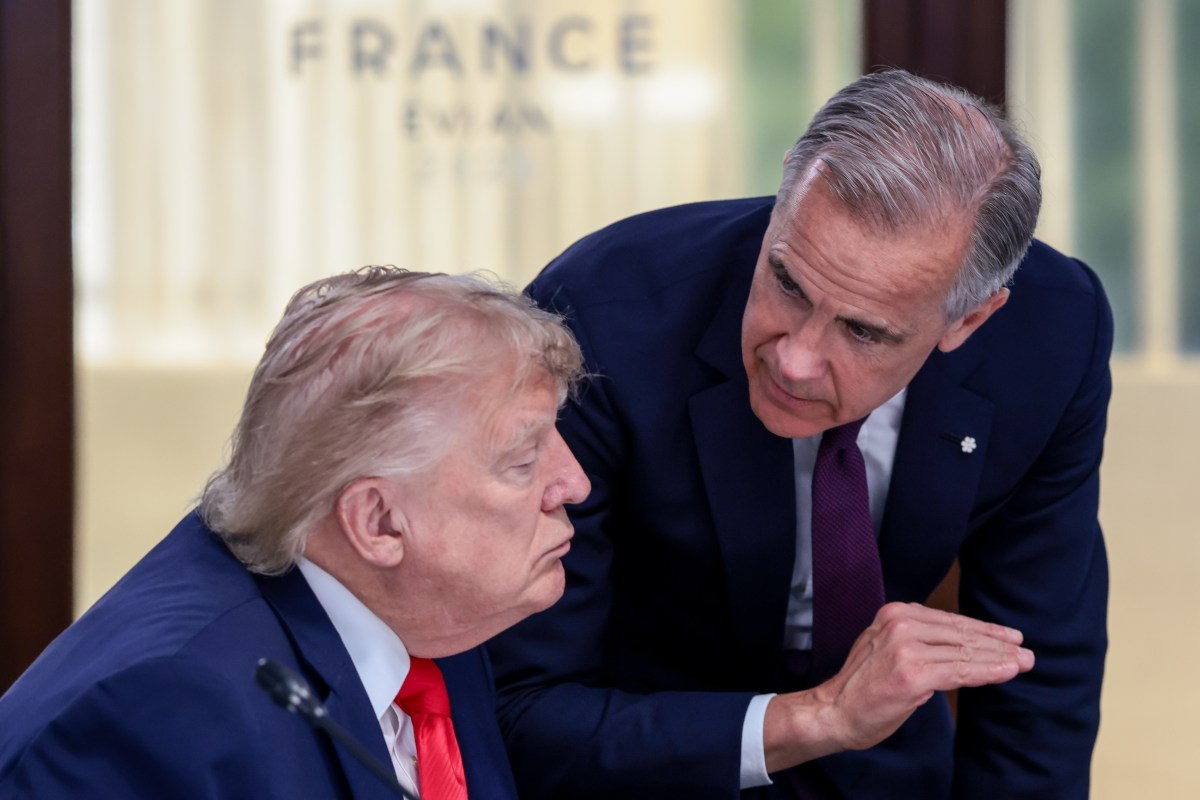
What does the breakdown of Canada-U.S. trade talks have to do with sanctions against International Criminal Court judges —and the sale of a Canadian payment processor to an American private equity firm? This week, negotiations aimed at resolving the escalating Canada-U.S. trade dispute collapsed. New 50 percent American tariffs took effect on billions of dollars of Canadian goods.
Prime Minister Mark Carney suspended negotiations and announced dollar-for-dollar retaliation, saying last-minute American demands were “unfair” and “uneconomic” and called into question the reliability of any agreement. The dispute is the latest reminder that economic interdependence does not distribute power equally. To understand how far that power can reach, consider Kimberly Prost.
Prost is a Canadian judge on the International Criminal Court. She and fellow judges Solomy Balungi Bossa of Uganda and Reine Alapini-Gansou of Benin sued the Trump administration in federal court in June, challenging sanctions imposed on them for their work. Their complaint describes disruptions to banking, credit cards, travel, insurance and major American technology platforms—consequences they characterize collectively as a “financial death penalty.” The United States did not arrest Prost or exercise jurisdiction over the territory where she lives.
The U.S. does not recognize the authority of the International Criminal Court. Washington placed her on a sanctions list, and the reach of the American financial and technological system did much of the rest. The campaign has continued.
Last week, the administration sanctioned ICC President Tomoko Akane of Japan and senior trial lawyer Abdoulaye Seye of Senegal. Earlier this month, Human Rights Watch, the Open Society Institute, the American Friends Service Committee and the Center for Constitutional Rights also sued the administration, arguing that the sanctions interfere with their work and violate constitutional protections. Whatever one thinks about the ICC—and there are legitimate arguments about its jurisdiction—the sanctions reveal an underappreciated dimension of American power.
Much of the global economy depends on access to the U.S. financial system. Global businesses transact in dollars. Visa and Mastercard are American, as are many of the world's dominant technology companies.
Extract — continue reading at the source.