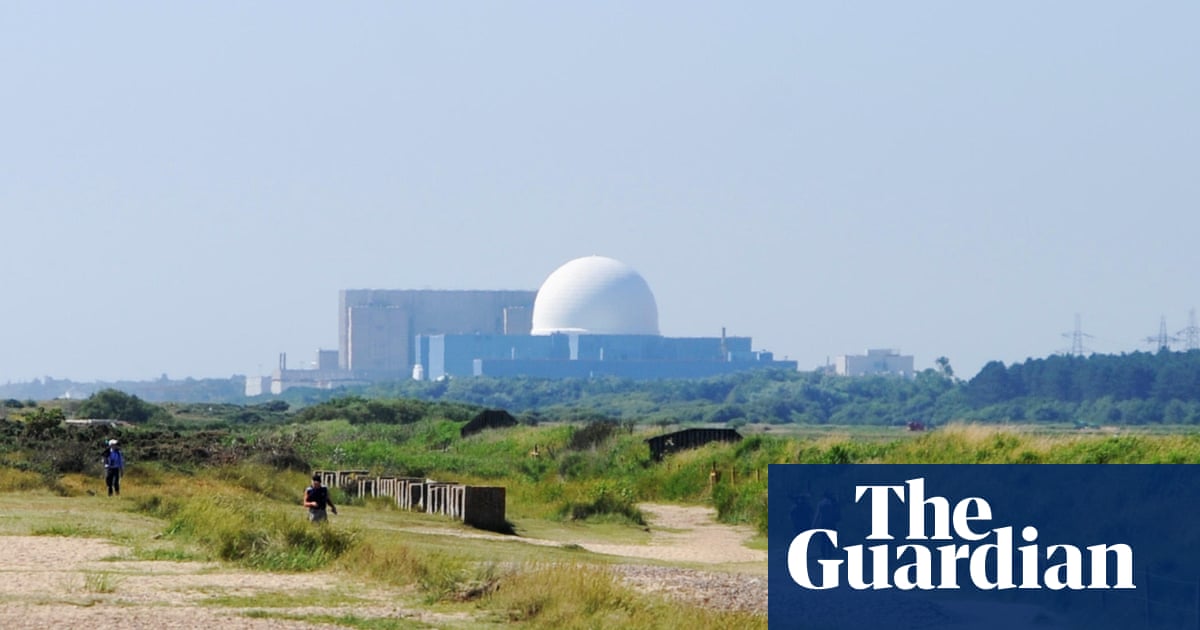
Green party members have voted to end the party’s opposition to nuclear power, dropping a commitment to phase out the technology in a major shift in its energy policy. The motion, adopted at conference, removes a “blanket opposition to nuclear fission” and instead commits the Green party of England and Wales to assessing nuclear projects alongside other low-carbon technologies. Its electricity generation policy still prioritises offshore wind, onshore wind and rooftop solar as the primary sources of electricity, but allows elected representatives to support new nuclear reactors on a case-by-case basis.
The Green MP Carla Denyer said the decision recognised there was a role for nuclear while the country moved towards an electricity system based primarily on renewables. Denyer said keeping existing nuclear stations running could be a low-carbon option because a significant proportion of their carbon footprint came from construction. She said at the time: “Renewables is simply the way forward.
Nuclear is not going to help us out in this climate emergency.” Other senior Greens have previously criticised the technology. The party’s leader, Zack Polanski, has described it as outdated and compared investment in new nuclear reactors to “creating a fax machine”. Last year, Adrian Ramsay, then a Green co-leader, criticised government support for Sizewell C.
The Green’s previous opposition to nuclear fission was rooted in its staunch opposition of nuclear weapons, one of the party’s founding principles. Eugene McCarthy, a co-founder of Greens for Nuclear and a supporter of the motion, said the urgency of the climate crisis demanded a willingness to consider all available options. The motion allows elected representatives to assess individual proposals on their merits, McCarthy said.
This motion basically lets our elected members of parliament take it on a case-by-case basis and go: ‘This makes sense, we will extend the lifetime of Sizewell B,’ and on a different case say: ‘Actually the numbers don’t add up here.’” Asked about Polanski’s previous criticism of nuclear, McCarthy said the leader remained entitled to his views. What this means is that he can now take a nuanced position.” Prof Andrew Stirling, who has advised government on nuclear power and energy policy, said the motion was “completely irrational”.
Extract — continue reading at the source.