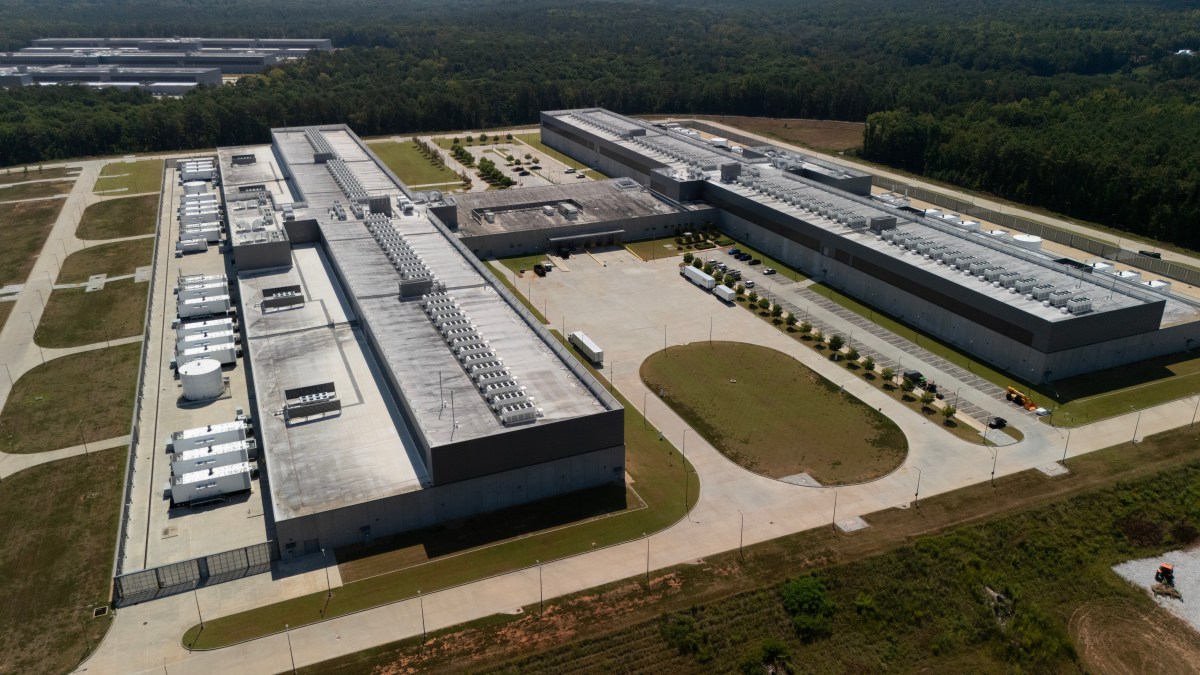
Artificial intelligence is driving a wave of massive new data centers across the U.S., raising concerns among communities and environmental groups about their demands for electricity and water, and their impact on nearby infrastructure and ecosystems. But Daniel Cohan, a professor of civil and environmental engineering at Rice University, told Newsweek that the environmental impact can vary significantly depending on three variables: the amount of electricity a facility requires; the type of electricity generated—whether by natural gas, coal, nuclear power, wind or solar; and how quickly the projects are being built. Rather, he said, the way they are being built matters.
The concern, he said, is what happens when enormous amounts of electricity demand are added in concentrated locations at high speed, before the grid and surrounding infrastructure have had time to adapt. Data centers are not inherently environmentally damaging, Cohan said. Their impacts can vary substantially depending on how they are powered, cooled and operated—and where they are built.
Cohan said data centers could, in theory, help accelerate investment in new generation and transmission infrastructure. More electricity demand can also mean more customers sharing the costs of maintaining the grid. I'm not saying this is how it's being done right now," he continued. 'The problem, he said, is the speed at which some projects are moving.
The construction of large data centers can also affect endangered and threatened species when projects require clearing forests, fragmenting habitat or building new roads and transmission infrastructure. In areas where development overlaps with sensitive habitats, those changes can add pressure to species that are already vulnerable. It is also worth putting the environmental footprint of data centers in context.
Their impacts can be significant at the local level, particularly where large facilities place new demands on electricity, water and infrastructure. But data centers are not the only major source of environmental pressure: commercial aviation, beef production, fast fashion and cryptocurrency mining all carry substantial environmental footprints of their own. The significance of a data center's impact ultimately depends on what is being measured—and where.
Water is another part of the environmental equation, although its importance can vary dramatically from one facility to another. Lin, a principal research hydrogeologist at the Illinois State Geological Survey, director of the Illinois Water Resources Center and a professor at the University of Illinois Urbana-Champaign, said data centers primarily use water as part of their cooling systems. The computing chips inside AI servers generate significant heat, Lin said, and cooling systems have to remove that heat to prevent damage to the equipment.
Extract — continue reading at the source.