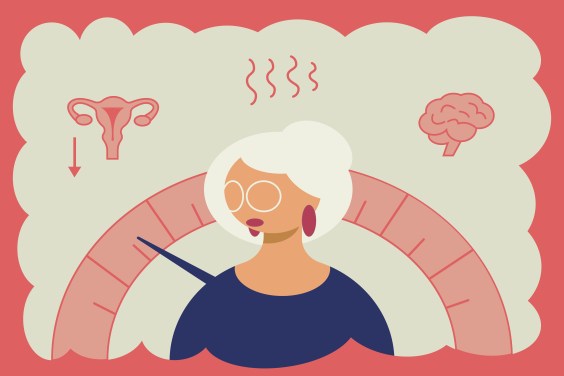
In fact, women account for two-thirds of all Alzheimer’s patients—a higher proportion than can be explained merely by their longer lifespans. So what causes the discrepancy? It’s possible that menopause, which men very notably do not experience, could be involved.
During menopause, hormone levels change, with estrogen tapering off as follicle-stimulating hormone rises. These hormonal changes lead to vasomotor symptoms like hot flashes, night sweats, and more. But many women also experience cognitive effects, like difficulty finding the right word or focusing their attention.
Additionally, brain regions susceptible to Alzheimer’s express receptors for hormones that shift during The Change. Now, a new study published in Nature Medicine is uncovering the role this inflection point may play in developing Alzheimer’s disease by looking at blood biomarkers. Read more: “The Evolutionary Mystery of Menopause” “We don’t think that menopause is directly causing dementia,” study author Kaitlin Casaletto of the University of California, Santa Barbara explained in a statement.
They then tested the women’s blood for hundreds of biomarkers and identified 16 whose levels were associated with menopausal changes. Importantly, these molecules were more closely linked to shifting hormone levels than the women’s ages, a strong suggestion the changes were related to menopause. As estrogen levels fell, the researchers discovered proteins involved in inflammation pathways rose.
This coincides with a general increase in postmenopausal inflammation other researchers have found that could set the stage for later neurodegenerative diseases. As follicle-stimulating hormone levels surged, levels of other proteins involved in synaptic function also climbed. These proteins are biomarkers for Alzheimer’s disease as well.
Of course, 80 women isn’t the largest sample size, so the team analyzed health data from more than 2,800 women enrolled in the United Kingdom’s BioBank study to confirm their findings. They then widened the scope of their investigation, looking at data from over 12,000 women in their 60s and 70s involved in four other studies. They found that women with the highest levels of these proteins had both poorer memories and a 15 percent higher risk of developing Alzheimer’s disease later on.
Extract — continue reading at the source.

/https://tf-cmsv2-smithsonianmag-media.s3.amazonaws.com/filer_public/5c/44/5c444071-f699-425f-bd7f-a3a0d76e4647/w020260608495789892714.jpg)
/https://tf-cmsv2-smithsonianmag-media.s3.amazonaws.com/filer_public/b0/b2/b0b276d8-542c-4966-860c-f52c810907af/alexander_the_great_school_in_mieza.jpg)