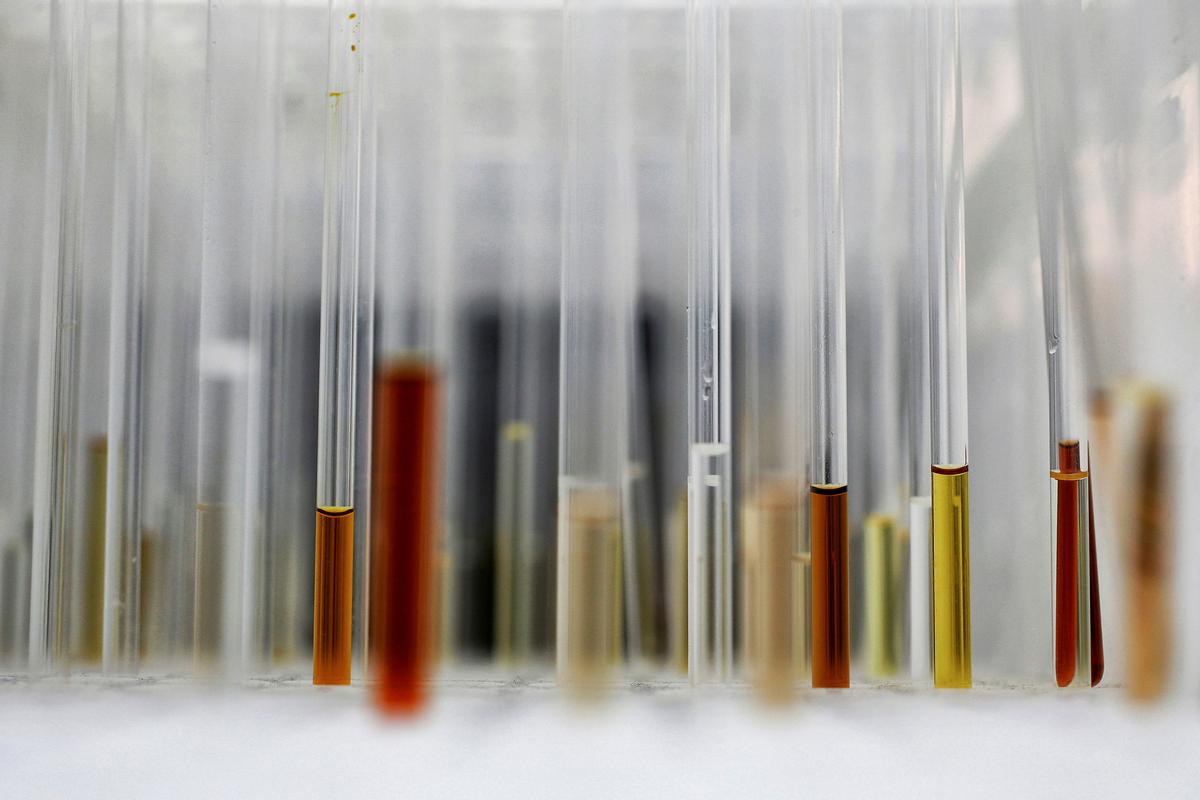
Sample analysis tubes at the Institute of Cancer Research in Sutton, UK. Photo by Stefan Wermuth/ When reading the news, you may occasionally be bemused by the flip-flopping science and health stories: one week you’re told coffee is good for you, the next week that it’s bad. Red wine extends your life, then it doesn’t.
Over time, new scientific studies seemingly contradict one another, leaving us unsure what evidence to believe. As a science journalist, I’ve learnt that often the actual problem is that each study is reported in isolation, rather than weighed against everything else we know. And sometimes, the risks of harm are high.
For example, in September 2025, I reported on the US Food and Drug Administration’s announcement that it would add a warning label to the painkiller acetaminophen (paracetamol), claiming that taking the drug during pregnancy increased a child’s risk of autism. It made global headlines. Yet looking closer at the science, it was clear that the FDA and its parent health department had cherrypicked a few studies, and downplayed other more robust findings.
This was confirmed a couple of months later when researchers published a major review that better represented the full body of knowledge. By then, of course, countless women had been needlessly scared about a painkiller that is widely considered one of the safest to take during pregnancy. In 2025, academics worldwide published about 7 million scholarly articles – that’s more than 19,000 each day.
On the surface, that might seem like a number to celebrate, but it also poses a problem. As the volume of research balloons, it can be hard to discern what these millions of papers actually tell us. Within the firehose, there are rigorous methodologies and important findings, but also baffling contradictions, unconfirmed results and sloppy science.
And some diverse forms of knowledge, such as lived experience and Indigenous insights, are rarely captured in scholarly articles and databases at all. Scientists publish and promote one paper after another because that’s how they advance in their careers. Journalists breathlessly chase the latest, flashiest studies so their headlines get clicks online.
Extract — continue reading at the source.