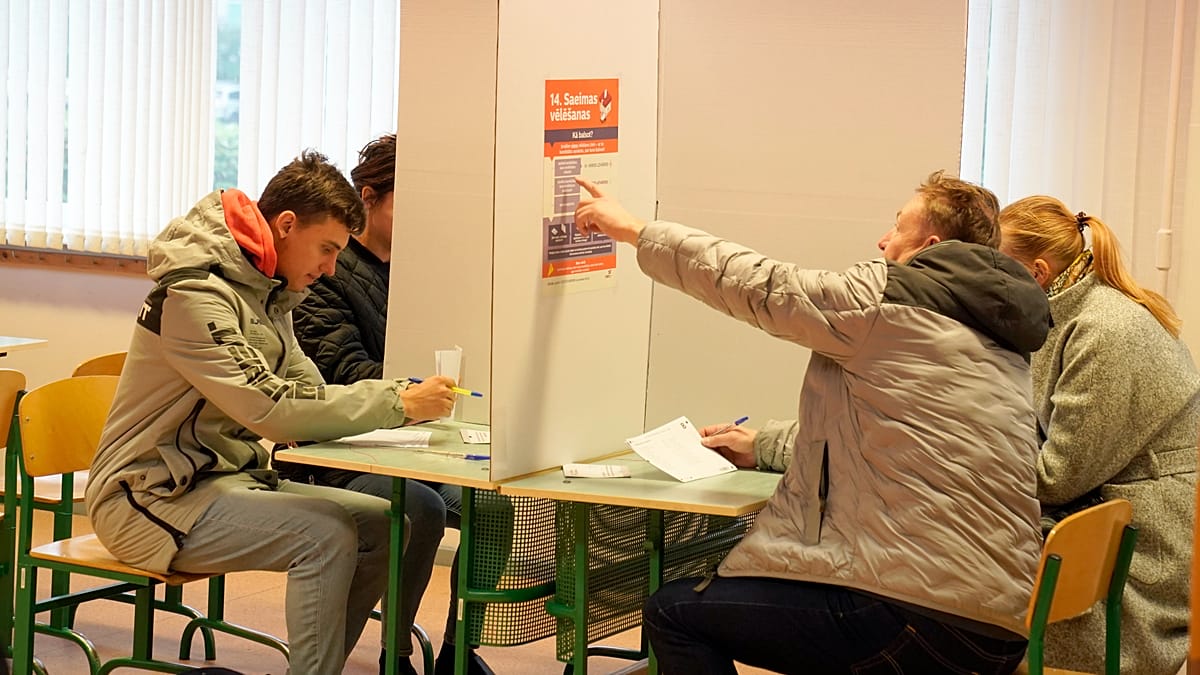
Polls opened on Saturday in Latvia's parliamentary election shaped by concerns over neighbouring Russia and the cost of living crisis. The Baltic state is a key pillar of NATO's eastern defensive flank, and experts say there is widespread support for supporting Ukraine in the war with Russia. "The stance towards Russia is the main reason for Latvians' Western, NATO and European anchoring," a Western diplomat in Riga , adding that it would be hard to imagine major political changes.
Polls predict the centre-right United List, led by Prime Minister Andris Kulbergs, will emerge the largest party in parliament in Saturday's vote. But his centre-right coalition, which also brings together the centrist New Unity, nationalist National Alliance and the Union of Greens and Farmers, is expected to emerge weakened from the election. Partial results are expected on Saturday evening, with preliminary official results due on Sunday.
The current governing coalition is made up of United List, New Unity, the Union of Greens and Farmers, and the National Alliance. Polls suggest the bloc is unlikely to retain power in its current form after the vote. Security is at the top of voters' minds in a country bordering Russia which was annexed and ruled by Moscow for much of the 20th century.
According to Roberts Kits, an analyst at the Latvian think tank LaSER, "defence and security will be the priority".vApart from a few dissenting voices, he said, there is broad consensus on maintaining military spending at nearly five percent of GDP and on supporting Ukraine. But the economy is also a major concern for voters. Latvia is the least affluent of the three Baltic States in terms of living standards, despite catching up since joining the EU in 2004.
Growth is sluggish, with voters pointing to the cost of living, the state of the healthcare system and the difficulties of public finances. Complicating this are major regional disparities. Around Riga, GDP per capita reached 101 percent of the European average in 2024, according to a Brussels report.
But in other regions this figure does not exceed 50 percent. The situation is particularly tense in the eastern region of Latgale, home to a large majority of Russian speakers and suffering from significant depopulation. "The most important thing is the lack of young people, the lack of good jobs," Aigars Soikants, 30, a resident of Daugavpils, the country's second-largest city, tells AFP.
Extract — continue reading at the source.