I don’t remember the last time I saw such a well-researched and truly globally representative exhibition that doesn’t patronise but quietly makes its case unapologetically, fearlessly and through sheer quality. Apart from being the first retelling of the international, pluralistic pictorialism movement, Tate’s new show allows for some refreshing encounters with unknown works for British audiences – around half of the works included here have never been shown in the UK. The effect is to radically deepen and widen our understanding not only of art history but the human impulses that drive us to make images in the first place.
We move seamlessly from the sudden shock of colour in three-colour carbon prints of flowers in a London garden in the 1920s to works born of the photographic salons, circles and clubs of Sydney, Hong Kong and Brazil. Historical moments collide; the epic emerges from the everyday. A man rows home across the Norfolk Broads, another works on a construction site in Singapore.
None of it feels out of place. It is all extremely, almost ecclesiastically, beautiful. More than a few times, I stopped in my tracks.
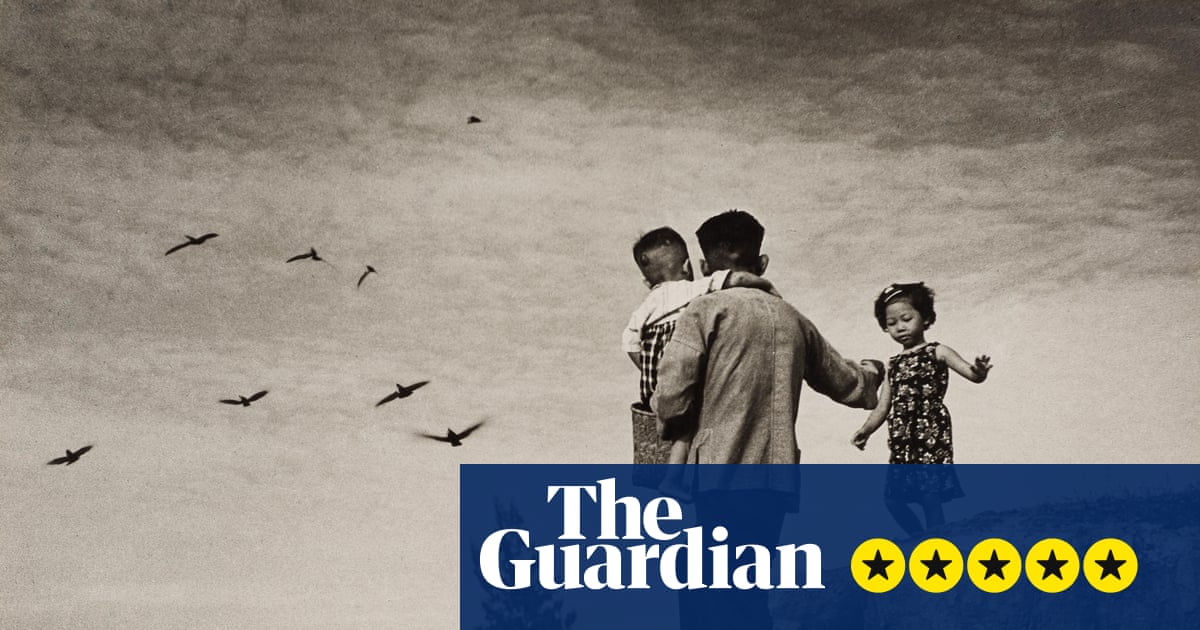
I could spend hours with Yip Cheong Fun’s 1940 Father’s Care, a cinematic image of a man holding one child with his hand extended to another, helping them down from the rocky crag they are walking over, on a journey across an open rural landscape somewhere. It’s a touching image of parenthood and the passage of time. Like this show overall, it’s about gestures rather than flashy declarations of feeling.
From this purist vision of love, we find a more ambiguous exploration in Lionel Wendt’s excruciatingly charged study of a young Sri Lankan man’s loincloth-clad body in the private intimacy of his Colombo studio, revealing hidden desires and truths the camera can’t conceal. It’s beauty as a kind of torture: the same medium that can expose the body to anthropological scrutiny transforms looking into something far more complicated. I’m equally intrigued by a 1955 series by Han Youngsoo: small, noirish works of Korean street scenes that beg for narration from the viewer.
Two 1925 bromide prints by Kate Smith show a woman in a flowing pre-Raphaelite style, pausing in a field dense with vegetation and foliage. Its title draws me closer: The Listener. What is she listening to, and what does this photograph want us to hear?
Extract — continue reading at the source.