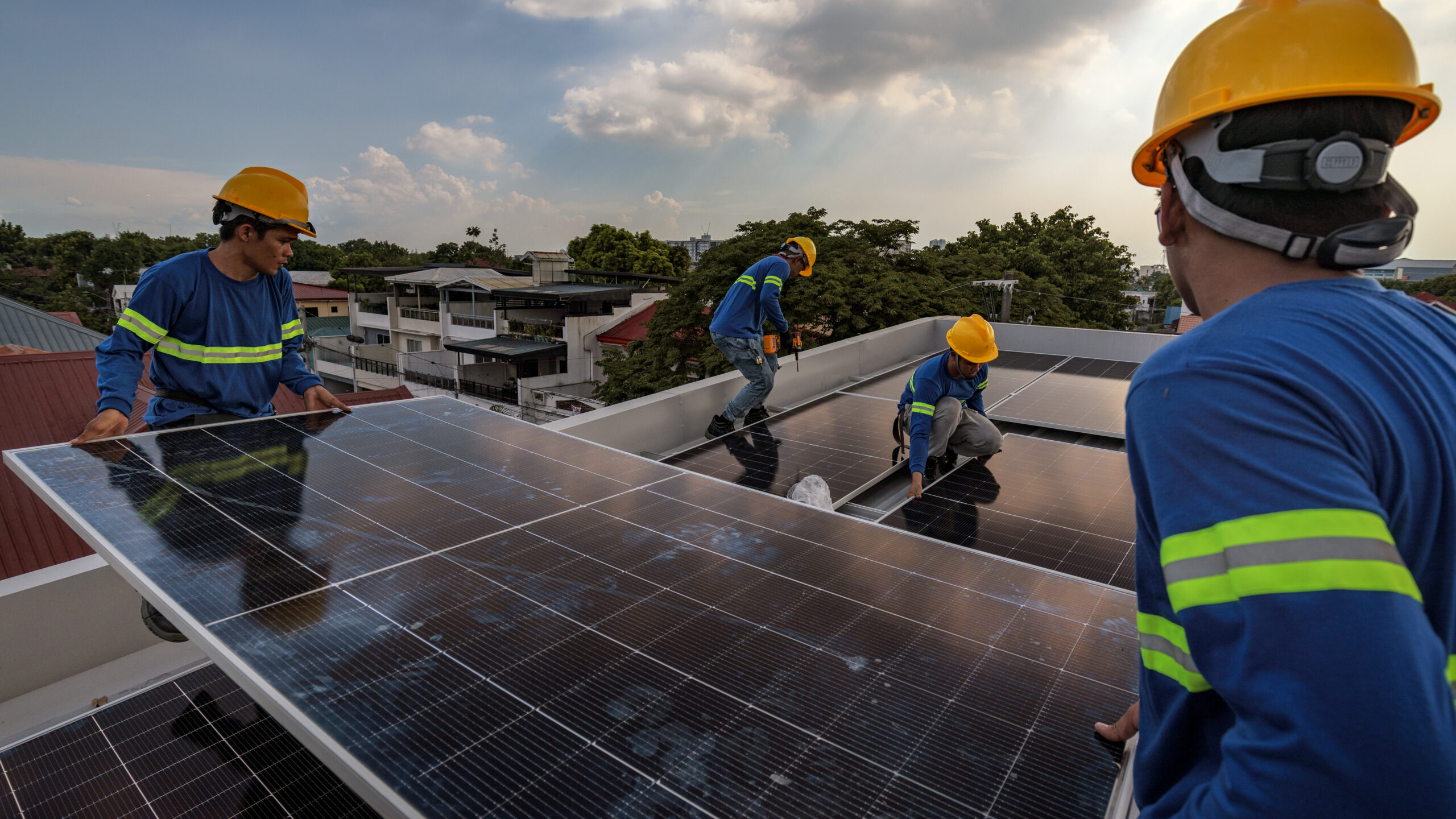
In the badlands of Chakwal, in north-central Pakistan, Bestway Cement is transforming plots of dry earth and olive and peach groves into a forest of solar panels. Its efforts will add 6.34 megawatts of generation capacity by the end of the year, the company says, in addition to the 26 MW of photovoltaic cells currently in place. Already, solar generates over a quarter of the electricity powering its cement plant.
At the end of 2025, such capacity totaled almost 1.2 terawatts worldwide, according to the Energy Institute’s Statistical Review of World Energy. While the nature of solar power, which depends on the availability of sunlight, means it only produces a fraction of its theoretical potential, that total equates to roughly three times the size of the global nuclear power fleet. The solar revolution made possible by cheap Chinese photovoltaic panels—and the rise of small-scale, individual power generation—is transforming energy in the developing and industrialized world alike.
Millions of people in poorer countries now have more reliable access to electricity, often through their own endeavors rather than massive installed infrastructure. And across the globe, consumers are using cleaner energy and bringing down their bills at a time when the cost of living is a constant concern, not least because of the Iran and Ukraine wars. But such a massive, ungovernable influx of energy carries risks, too—the world’s power infrastructure was not designed for solar self-generation—and investment, pricing models, and even the security of supply could be affected as a result.
Extract — continue reading at the source.