When NAZA‘s chilling final frame turned black and the sound of moviegoers crying became audible, I experienced something I have never experienced in a movie theater in my life. Nobody in the sold-out screening got up. The entire audience sat, without speaking, through the credits.
The only sounds were muffled sobs. And then, wordlessly, the entire Brooklyn audience rose from their seats and left the cinema in total silence. NAZA is an unusual movie with a challenging premise: co-directors Yuval Abraham and Rachel Szor (No Other Land) interviewed 24 current and former members of the Israeli military about how the IDF killed one out of every 30 people in Gaza over the last three years. (At least 75,000 people have been killed in Gaza since October 7th, the vast majority of whom, by Israel’s own admission, were civilian men, women, and children.) All 24 worked in Israeli military intelligence and offered stark and often horrifying accounts of their war crimes.
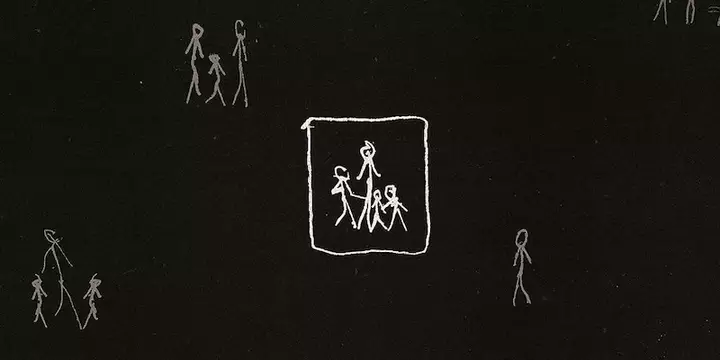
While the title sounds like a portmanteau of “Nazi” and “Gaza,” a “NAZA” is actually a “unit” of collateral damage—a civilian killed while trying to take out a Hamas operative. Each civilian Palestinian killed by an Israeli aerial assault is counted as “one NAZA,” from a day-old baby to a 92-year-old great-grandmother. NAZA is a cold, cynical, calculating term.
It achieves a different kind of dehumanization than comparing a stigmatized group to insects or rodents (i.e., how the Nazis referred to Jewish people as Jüdischer Parasit or vermin). Rather, NAZA is more evocative of how, in Errol Morris’s The Fog of War, U.S. Secretary of Defense Robert McNamara recalled how he’d applied Henry Ford’s assembly line techniques to the computer management of mass slaughter of the Cambodian and Vietnamese people.
The term NAZA isn’t meant to reduce Palestinians to animals, but to numbers—to make the quantitative extermination of human beings so removed, so clinically digital, as to not require investigation. (Indeed, as one of the soldiers says, the people doing the remote killing often feel like they are just playing a video game, like Buster Bluth carrying out drone strikes on Arrested Development.) 15 NAZA per strike was once deemed acceptable, but after October 7th that number rose to 50, then 100, and at one point even 500. Most, but not all, of the speakers seem to feel little remorse or personal responsibility for their actions; like Adolf Eichmann at his 1961 trial in Jerusalem, most claim to just have been following bureaucratic orders. They seem to blame the NAZA for not evacuating, or for loving a “terrorist” husband, or for being children destined to become terrorists themselves—or for just having bad luck.
NAZA presents something far more sinister than Israelis who feel guilty for killing people: Israelis who don’t seem to feel bad about it at all. NAZA’s premise immediately prompts two questions, the first being: Is there sufficient moral justification for a film about Gaza to be made by two Israeli filmmakers? (In press notes, the directors say they “made this film out of a sense of obligation to use our position as Israeli filmmakers and journalists to examine the systems behind the mass killing of Palestinian civilians for which our country is responsible.”) I was prejudiced on this front after reading postings by Palestinian writers whom I respect a great deal and who, understandably, were not thrilled by the idea of the film. Why, they wondered, should the world have any interest in what Israeli filmmakers have to say about Gaza?
Extract — continue reading at the source.