Congenital heart disease is the most common birth defect, affecting about 1 in 100 babies born each year. The condition can have many causes, including changes involving TBX5, a gene that plays a critical role in building the heart. In some cases, a child has only one working copy of TBX5 rather than two healthy copies inherited from the parents.
For years, researchers have been trying to understand why losing the function of just one copy can have such a major effect on heart development, even when the second copy still works. Researchers at Gladstone Institutes now report that TBX5 has another important role beyond controlling gene activity. It helps organize DNA into the physical three-dimensional structure that heart cells need to work properly.
In a new study published in Science, the scientists found that losing even one copy of TBX5 can disrupt this organization, changing how many other genes are used inside heart cells. The findings offer a new way to think about a long-standing question in genetics: why losing one copy of certain genes, a condition called haploinsufficiency, can cause severe problems during development. "TBX5 is just one example of a broader class of genes that cause birth defects when only one copy is lost," says Benoit Bruneau, PhD, director of the Gladstone Institute of Cardiovascular Disease and a senior author of the study.
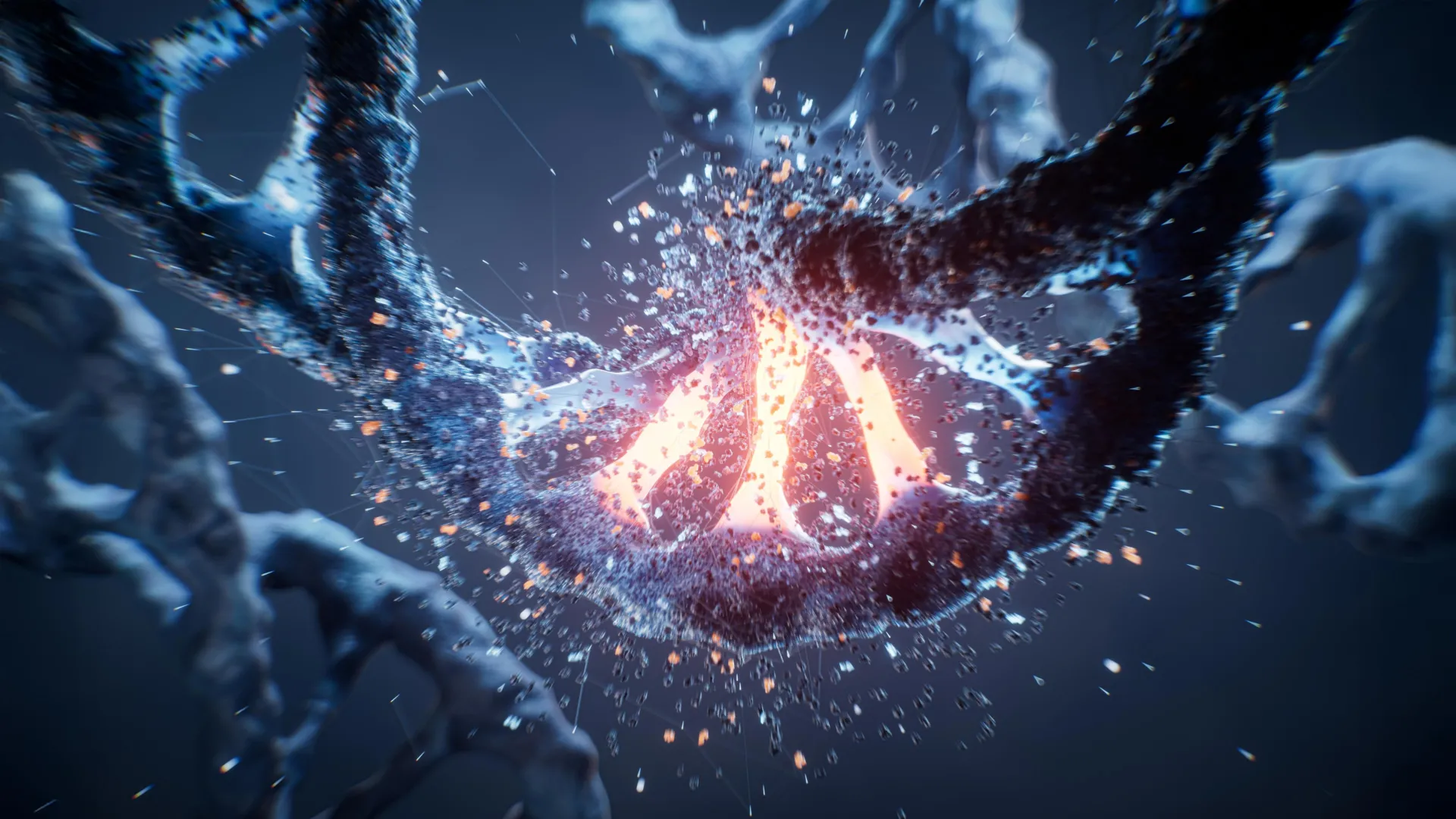
"What's exciting about our findings is they suggest many different birth defects might happen for the same reason: the cell's 3D instruction manual simply gets folded the wrong way." "We developed and used different computational models to analyze results from thousands of individual cells," says Katie Pollard, PhD, director of the Gladstone Institute of Data Science and Biotechnology and the other senior author of the study. "That allowed us to finally see how losing this one protein causes the heart's DNA structure to break down on every level." Packing DNA into a cell is a remarkable feat. It is similar to squeezing a miles-long instruction manual into the head of a pin.
But DNA is not packed randomly. Each type of cell folds its genetic material into a distinct three-dimensional arrangement, allowing a heart cell to access a different set of instructions than a brain cell. This 3D structure is arranged in multiple layers.
It includes large compartments (like separate binders of the manual), domains (like paragraphs), and chromatin loops (like folding a page so two distant sentences touch). These loops allow distant genetic switches called enhancers to make physical contact with specific genes. Those contacts help cells activate the instructions they need.
Extract — continue reading at the source.