Almost exactly a century ago, in October 1926, Cambridge University made a small but significant change to its statutes. It introduced the right for academics to take every seventh term off. The word “sabbatical” comes from the Hebrew “shabbath,” meaning “rest.” Yet in an academic context, it usually means a rest from one kind of work, so that you can focus on another.
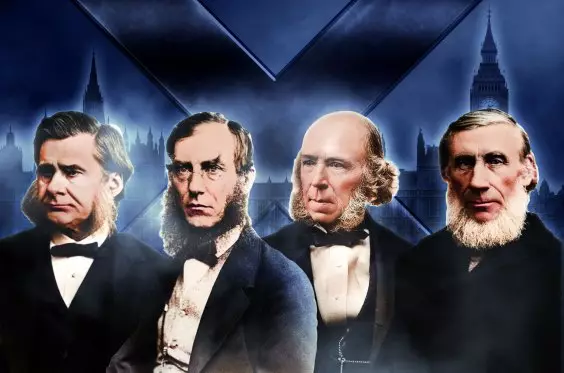
Cambridge’s embrace of the sabbatical was a sign that the university didn’t only care about teaching students. It also wanted its scholars to carry out original research. This innovation was just one milestone among many in the slow process by which the very purpose of our universities was gradually altered—a transformation that was driven by a mysterious-sounding group of British scientists who called themselves the “X Club.” In the Middle Ages, when Oxford and Cambridge were created, their predominant function was to train students for a career in the church.
Over the centuries, they became more like intellectual finishing schools. Yet the idea that it was the duty of professors also to do original research didn’t come into it, in any serious way, until the late 19th century. Tell this to most academics now, and they won’t believe you.
They assume that the division of their work between research and teaching is an ancient tradition. I visited the archives in Cambridge’s University Library and looked at endowment documents for professorships, which go back to Tudor times. Before the 19th century, I found, they don’t say a thing about research.
Take the Lucasian Chair of Mathematics, which since its birth in 1663 has been held by the likes of Sir Isaac Newton and Prof. Its terms say only that the holder should give lectures and be at home on certain days to talk to students. Fast-forward to 1864, though, and these assumptions are being called into question.
That’s when nine British scientists formed a private club that met for dinner once a month at the St George’s Hotel in Mayfair. They called themselves the X Club to indicate that they embraced no doctrine. Yet they agreed about a couple of things.
Extract — continue reading at the source.