Florida Governor Ron DeSantis has joined the backlash against automated license-plate readers, a striking development because it scrambles a familiar political divide. After citing cases in which police officers have been accused of using the technology for personal surveillance, he added: “I think people are right to be concerned.” DeSantis isn’t the only figure on the right to advance claims of that nature. Republican Senator Josh Hawley of Missouri opened a Senate investigation Wednesday into Flock’s collection, retention and sharing of Americans’ data.
Conservatives have traditionally favored giving police powerful crime-fighting tools, while progressives and civil libertarians have been more wary of government surveillance. Now, a technology sold as a crime-fighting tool is turning conservatives into privacy hawks, reshaping one of the most traditional divisions in American politics: the tension between law-and-order policing and civil liberties. Conversations and opinions surrounding police technology in the United States have been pretty straightforward for the past few decades.
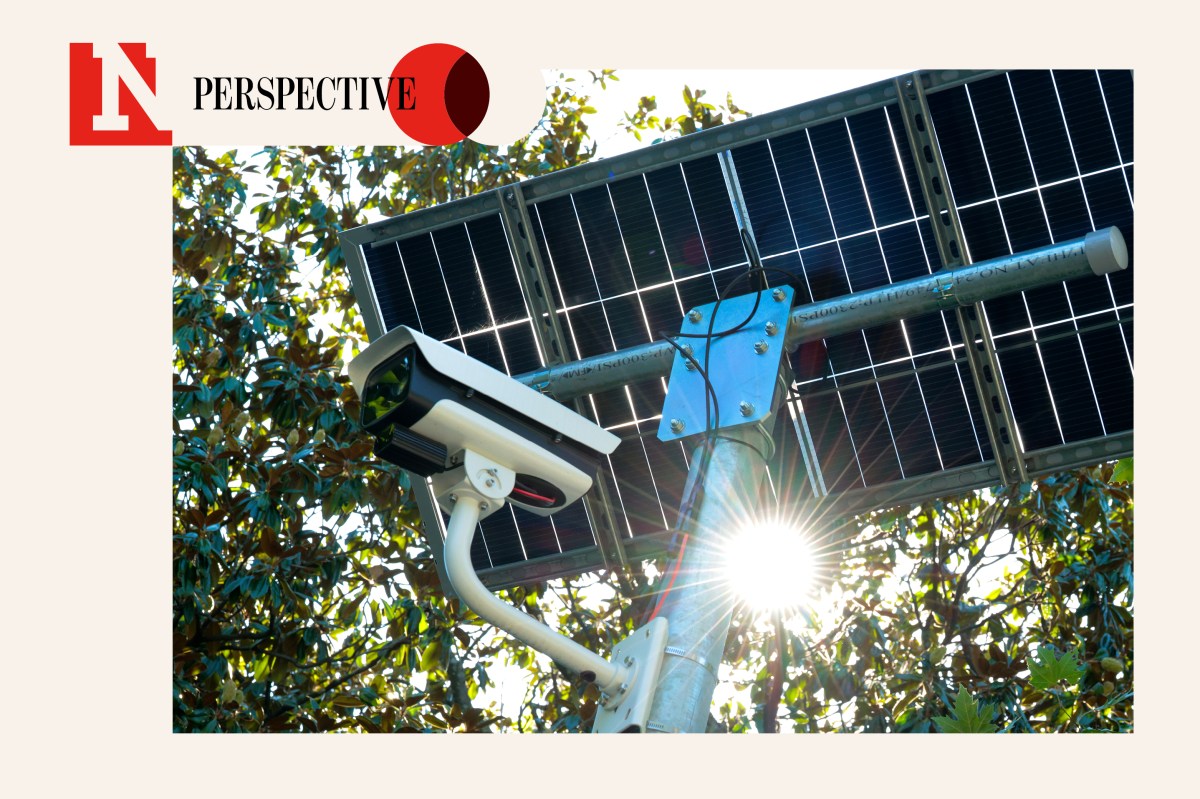
Law-and-order conservatives tended to give police wide latitude to acquire tools that promised to catch criminals, while civil-liberties groups, particularly the American Civil Liberties Union (ACLU), supplied much of the organized resistance to surveillance. Flock has apparently inverted that mental modus operandi. The devices photograph passing vehicles and record license plates, identifying characteristics, location and time, creating a database that police can search during investigations.
Its network now includes more than 120,000 cameras across 49 states. While there have been challenges to the Flock system, the courts have not established that the surveillance method amounts to an unconstitutional search. In April, for example, the Virginia Court of Appeals rejected a Fourth Amendment challenge, reasoning that the system photographed a vehicle and license plate as it traveled on public roads.
But the scale changes the political question, even if the constitutional answer remains the same. For conservatives now, Flock collapses two kinds of policing that were once easier to separate: investigating people suspected of crimes and collecting information on everyone in case it becomes useful later. Supporting the first fits comfortably within law-and-order politics, but the second starts to look like the kind of government power conservatives have traditionally distrusted elsewhere.
When police can query a privately built network to reconstruct where an ordinary person's car has appeared, the question shifts from whether officers should be allowed to use technology to whether citizens should have to enter a searchable government-accessible record simply by driving in public. As a result, the cost-benefit calculation also shifts. Conservatives can favor aggressive policing while demanding limits on how long location data is kept, who can search it, which agencies can obtain it and whether a warrant should sometimes be required.
Extract — continue reading at the source.