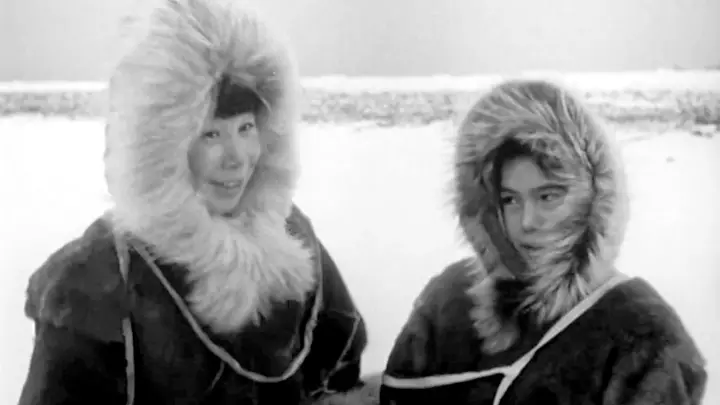
Western imperialism was often justified as a moral imperative – colonising countries had a duty to civilise the ‘savages’ they encountered oceans away. This ‘white man’s burden’, as the English writer Rudyard Kipling called it, partially hinged on the notion that emotions are universal and biological, existing on a continuum between the refined rationality of Europeans and the uncontrolled emotionality of those they colonised. In this video essay, the UK filmmaker Lewis Waller discusses two works of anthropology that challenged this paradigm: Never in Anger (1970), the US anthropologist Jean Briggs’s portrait of an Utku Inuit family, and Unnatural Emotions (1988), the US anthropologist Catherine Lutz’s account of emotions on Ifaluk Atoll in Micronesia.
Placing these works in the context of the colonial past and more recent research, Waller makes the case that emotions aren’t biologically hardwired and universal, but filtered through sociocultural contexts and constantly being constructed. A profile of a scholar of the history of emotions provoked a remarkable backlash. But critics of the field misunderstand it It’s tricky to define what an emotion is: is surprise one, or something else?
Here are a few simple rules to get started Political communities are based on feelings of familiarity and affinity, so how do you make people internationalists? Research on the common strategies used to deal with emotions suggests their usefulness differs from culture to culture Cutting-edge computational techniques are shedding light on how the emotional experiences of past cultures compare to ours Respect your fears: what the Mapuche approach to fear can teach us about transforming our biases and fighting prejudice Emotion is not opposed to reason but a crucial tool for assessing risk in a complex, uncertain world
Extract — continue reading at the source.