In Wyoming, we find cowboys, bison, rodeos, elk, and natural hot springs. A recent study published in Papers in Palaeontology reported a new species of cephalopod: Wyoteuthis linsterorum (Wyoteuthis = “a squid from Wyoming”). It’s a belemnite, a now-extinct group of squid and octopus relatives.
Its fossils were unearthed at the Sundance formation, a set of rocks dating to about 160 million years ago, and then stored in museum collections until paleontologists recognized their uniqueness. Belemnites had been found in this fossil formation before, since it used to be an inland sea during the Jurassic, connected to the Pacific Ocean. But never had a belemnite this big turned up.
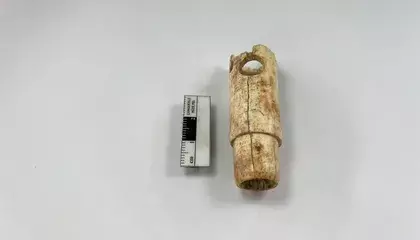
In fact, it was the chunkiest belemnite ever found, based on the 2.4-inch girth of its rostrum, a bullet-shaped shell that protected its soft body parts. Led by University of Wellington paleontologist Alexey Ippolitov, researchers used CT scanning to get an in-depth view of the rostrum, as well as other mineralized structures, such as the chambers for buoyancy regulation (phragmocone) and the cup (alveolus) linking the parts of the shell. All three structures set this belemnite apart from any known species.
The researchers estimated that the belemnite was no more than 18 inches in total body length, despite the unusual girth of its rostrum. In other words, Wyoteuthis linsterorum was chunky. Why the ancient animals evolved to be so stocky remains a mystery, but it may have offered the species dietary opportunities.
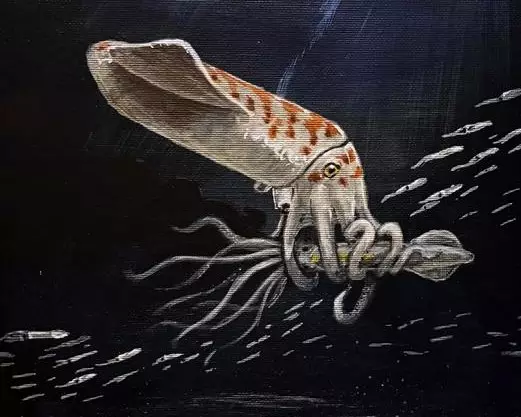
It sounds like W. linsterorum was the bully in the sandbox, preying on more delicate species. That said, it ultimately met its match at the end of the Cretaceous, as when the large dinosaurs perished, belemnites got wiped out too. Lead image: Illustration of Wyoteuthis linsterorum by Jason Poole © Courtesy of Jessica Lippincott
Extract — continue reading at the source.