Humanity’s greenhouse gas emissions may have warmed the planet enough to reverse the next ice age. In a study published October 22 in the journal Science, researchers reconstructed the growth and retreat of Canada’s Barnes Ice Cap, which was once a massive stretch of ice called the Laurentide Ice Sheet. The timeline they put together suggests that the ice cap started to expand around 2,000 years ago—a sign a new ice age was beginning—but it was cut short by planet-warming industrialization in the 1960s.
The Laurentide Ice Sheet dominated the landscape of modern-day Canada and the northern United States tens of thousands of years ago. At its peak around 20,000 years ago, it covered almost 30 percent of the continent, extending from above the Arctic Circle to what is now Illinois. The ice was more than two miles thick in some spots.
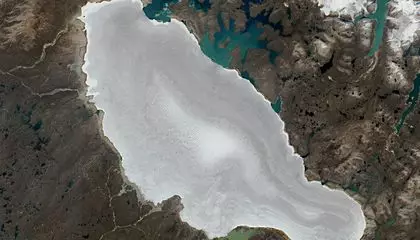
All that’s left of this formidable feature today is the Barnes Ice Cap. It’s a Delaware-size ice cap on central Baffin Island in Nunavut, Canada. Over the past 2.6 million years, Earth has been cycling between times with large ice sheets, called glacial periods or colloquially, ice ages, and times without them, or interglacial periods.
The last glacial period ended around 11,700 years ago, and we are now in an interglacial period named the Holocene. Scientifically speaking, we’re still in an Ice Age Technically, we’re in the Late Cenozoic Ice Age, which started around 34 million years ago. The Earth flip-flops between glacial and interglacial periods within this Ice Age.
In the new study, researchers took advantage of the vegetation once encased in the Barnes Ice Cap. After a period of retreat, “mosses eventually colonized this newly exposed land” on the edge of the ice, lead author Nicolás Young, a paleoclimatologist at Columbia University, tells Wired’s Molly Taft. The ice covers the moss and kills it.” Unlike other glaciers that slide around, the Barnes Ice Cap is frozen onto its bedrock.
While a sliding glacier would have crushed older vegetation, during periods of expansion, this ice cap encased the greens that had grown around it. So, Young and colleagues looked at the buildup of a form of beryllium in newly exposed bedrock and in surrounding boulders. The element can tell researchers when rock was exposed to the atmosphere and cosmic rays.
Extract — continue reading at the source.