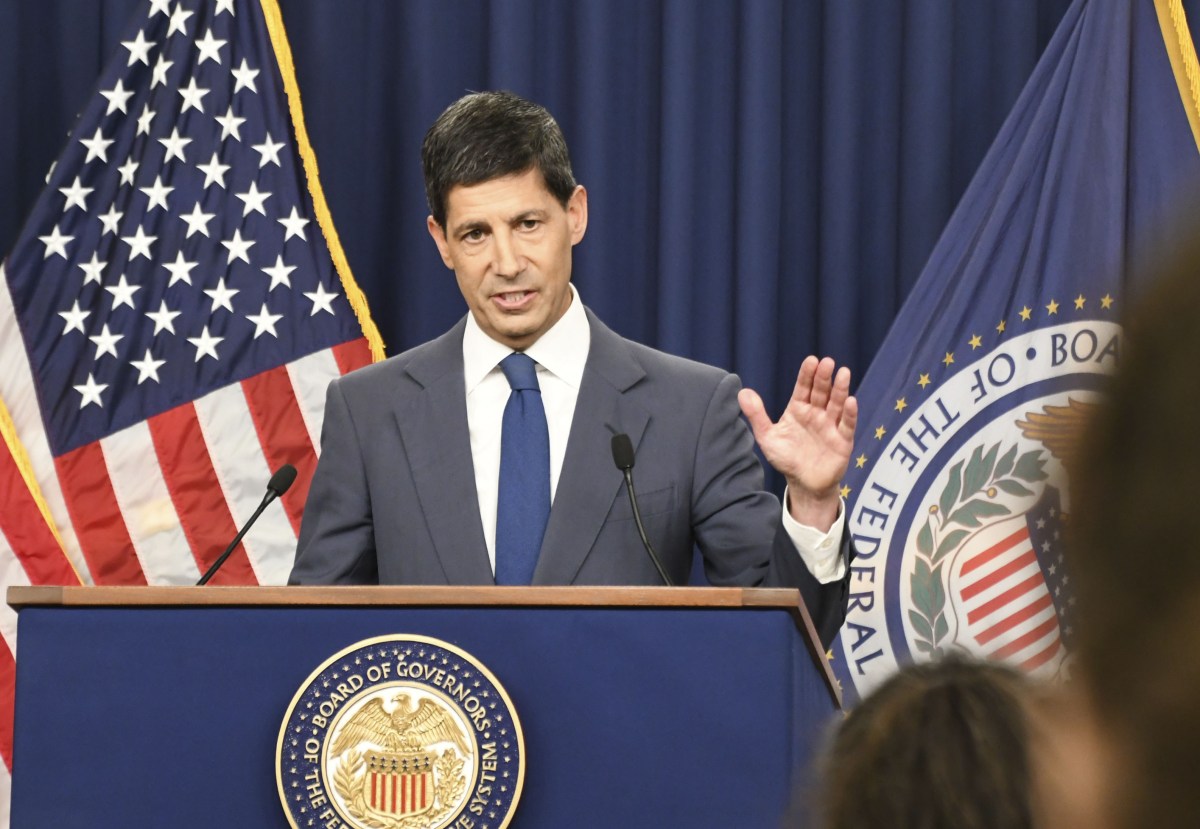
BRUSSELS ― Ursula von der Leyen used a major speech on Wednesday to pitch Europe as the leader of a group of like-minded countries that want to hold their own against rival powers such as Russia and China. Not invited to join this EU-led coalition? Donald Trump’s United States.
Speaking before an audience that included Canadian Prime Minister Mark Carney, who has publicly fallen out with Trump, the European Commission president spelled out her vision of Europe as a geopolitical leader with plans for new partnerships and closer relationships — the most notable of which was offering to explore possible “associate EU membership” status for Canada, in what would amount to a major first for the EU. She added that the EU wanted to “build global coalitions for our resilience and democracies. And here too only Europe ― with its size and power ― can take the lead.” For the head of the EU’s executive branch, who’s now two years into her second five-year term, the speech amounted to a declaration of geopolitical legacy.
Coming one year after she declared Europe’s “independence moment” from the same platform, von der Leyen expanded on that idea in a speech that seemed to echo Carney’s own address at the World Economic Forum in Davos, Switzerland, in which he called for the world’s “middle powers” to stand together against autocrats. In addition to offering Canada associate member status, von der Leyen suggested bringing the leaders of the U.K., Norway, Canada and Ukraine together in a newfangled “European Security Council” that would exist outside of NATO, offering a platform to discuss hybrid threats without the United States. She also proposed that, with Europe in the role of coordinator, like-minded countries could jointly address challenges ranging from climate change to Chinese industrial overcapacity to the risks of frontier AI models.
For example, the speech did not address how to meet Ukraine’s immediate financing needs — a pressing concern at a time when Kyiv has said it needs an additional €23 billion before the end of the year and the EU is its main financial benefactor. It also included tough language on trade imbalances with China and the toll they are taking on Europe’s economy, but included no new policy proposal aside from doubling down on ongoing dialogue with Beijing. It also skated over some of the major foreign policy issues dividing EU capitals, namely the Middle East and Israel’s relationship with the Palestinian territories in the West Bank and Gaza.
Von der Leyen made headlines last year by proposing to suspend the EU’s Association Agreement with Israel over humanitarian violations in Gaza. But this time she disappointed lawmakers who’d hoped she might offer a ban on trade with illegal Israeli settlements, an implicit recognition that her proposal from last year had floundered amid divisions between capitals. Instead, she lamented the situation in Israel’s illegal West Bank settlements — and urged governments to overcome their disagreements.
Most of all, however, it was von der Leyen’s implicit suggestion that the EU should forge on without relying on the U.S., striking up new partnerships and setting up its own Security Council — outside of NATO — that seemed to unnerve some of the diplomats, lawmakers and officials watching her speech. I think that it gives the signal to the world that NATO is irrelevant and we need to replace it with something,” said Riho Terras, an Estonian member of the conservative European People’s Party and former commander of his country’s armed forces. Indeed, many watchers pointed to the reality that in areas ranging from technology to pharmaceuticals to defense procurement, the EU remains heavily dependent on the U.S.
Extract — continue reading at the source.