Cities built around autonomous vehicles and sustainable multi-family homes constructed by robots could be the future of housing, architects tell Newsweek. Build It” is the theme for World Architecture Day this year, which is annually marked on the first Monday of October. The day, which falls on October 5 in 2026, was created by the International Union of Architects (UIA) and runs parallel with the United Nations’ World Habitat Day.
According to a 2026 UN report, around 3.4 billion people globally lack access to secure, safe, and adequate housing. Here, we spoke to architects who shared their visions for the future of housing and what our homes, communities, and life could look like in 2050. Just under half (45 percent) of the world’s 8.2 billion people were reported to be living in cities last November, and two-thirds of the global population growth is expected to happen in cities by 2050, according to the UN.
Amid housing shortages, architects say there will need to be an inevitable shift towards more multi-family housing. Architect Clara Wineberg, principal and residential practice leader at Perkins Eastman, believes that the U.S. will see the return of cottages, townhouses, and other “missing middle” homes, adding density to suburbs in “a way that still feels like home.” Wineberg told Newsweek that this shift could create a larger tax base, allowing city governments and village boards to consider other needed investments. Wan believes that zoning codes need to change to allow greater density and multiple uses, and building codes are evolving to recognize new construction methods.
Growing concerns over climate change will also shape the future of housing. Architect Daniel Baumann, principal and design director at Henning Larsen, told Newsweek: “Homes will change because the climate is changing. By 2050, housing will need to withstand hotter summers, heavier rainfall, and flooding while using far less energy and water.” The findings of a study published in March 2026 in Advancing Earth and Space Sciences revealed “a large and significant acceleration of global warming,” with faster warming over the last 10 years than during any previous decade.
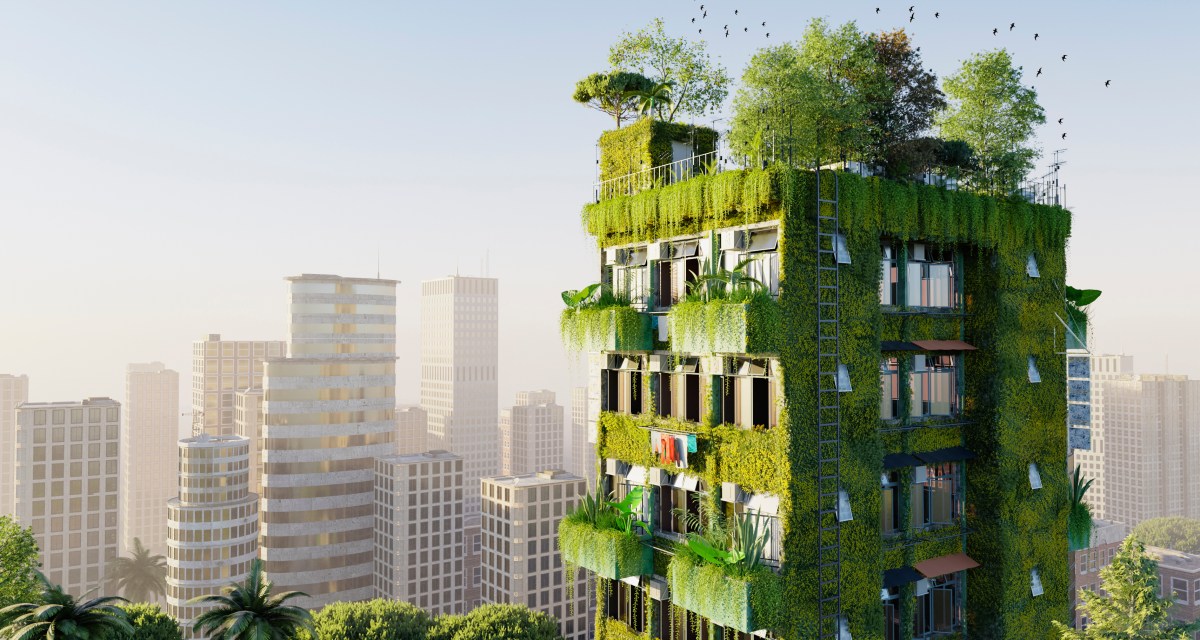
The study warned that “it is quite possible that warming may continue its fast pace or even accelerate further.” An October 2025 study in The Lancet noted that climate change is “making living conditions increasingly hazardous,” due to rapid shifts in temperature and weather patterns. The study also warned that the “location, construction, and operation of homes influence greenhouse gas emissions and must be improved to reduce their environmental impacts.” Architect Scott Specht, founding partner at Specht Novak, says that “energy is probably where houses will change the most” in the future. With heat pumps and better windows now in the mix, Specht believes that “by 2050, a lot of houses will be making and storing much of their own power and leaning on the grid mostly as a backup.” Baumann believes future solutions will entail working with nature, such as green roofs that cool buildings, and biogenic materials, such as timber, that retain less heat than concrete.
Saisakorn sees more cross-laminated timber (CLT) being used in the future, as it presents “a more immediate and sustainable option” than 3D printing, which is largely limited to single-family housing. Composed of solid lumber layers glued at right angles, CLT panels are “exceptionally strong, rapid to assemble, and highly sustainable,” Saisakorn said. Having a significantly lower carbon footprint than traditional concrete, “CLT is a compelling prospect as a primary building material for future residential developments,” he said.
Extract — continue reading at the source.