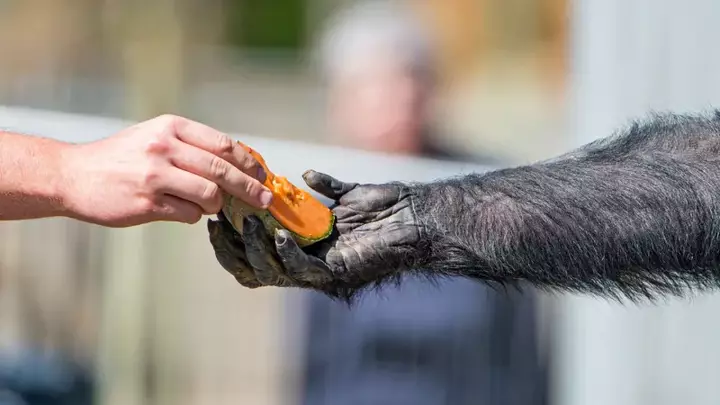
Viruses may be minuscule, but one could have influenced major differences between human and chimpanzee brains. Millions of years ago, a virus left DNA behind in an African ape’s genome, and the genetic material stuck around in modern day chimps. Those ghosts of infections past appear to influence genes involved in neuron development, which may help explain how human and chimp brains ended up so different, researchers report October 23 in Science Advances.
Compared with the brains of their chimpanzee kin, human brains are three times larger and more cognitively powerful. Yet “most of their protein-making genes are very similar,” says Johan Jakobsson, a neuroscientist at Lund University in Sweden. In the absence of large differences in the genetic code, Jakobsson and his colleagues decided to look at the parts of the human and chimp genome that control when and where genes are turned on or off.
Changes in gene regulation can come from viruses. Some viruses called retroviruses insert their own DNA into their hosts’ genomes to command host cells to build more viruses. But those parasitic bits of DNA can linger long after an infection.
If this happens in reproductive cells, the viral DNA gets passed down with the host’s DNA. These leftover bits, called endogenous retroviruses, no longer code for the production of infectious viruses, but they can have a big impact on the host’s biology — especially if they make copies of themselves across the genome. Such viral remnants make up at least 8 percent of the genomes of humans and chimps alike.
More generally, these DNA leftovers have been linked with some major evolutionary events, such as the evolution of the mammalian placenta. Jakobsson and his colleagues focused on a particular viral vestige in chimps. The holdover came from an infection in an ancestral African ape somewhere between 5 million and 7 million years ago.
In chimpanzees, the viral DNA had stuck itself into the genome at 158 different locations. However, it is curiously absent in humans. The researchers wanted to know how that exact pathogen footprint might affect chimpanzees’ brains compared with those of humans.
Extract — continue reading at the source.