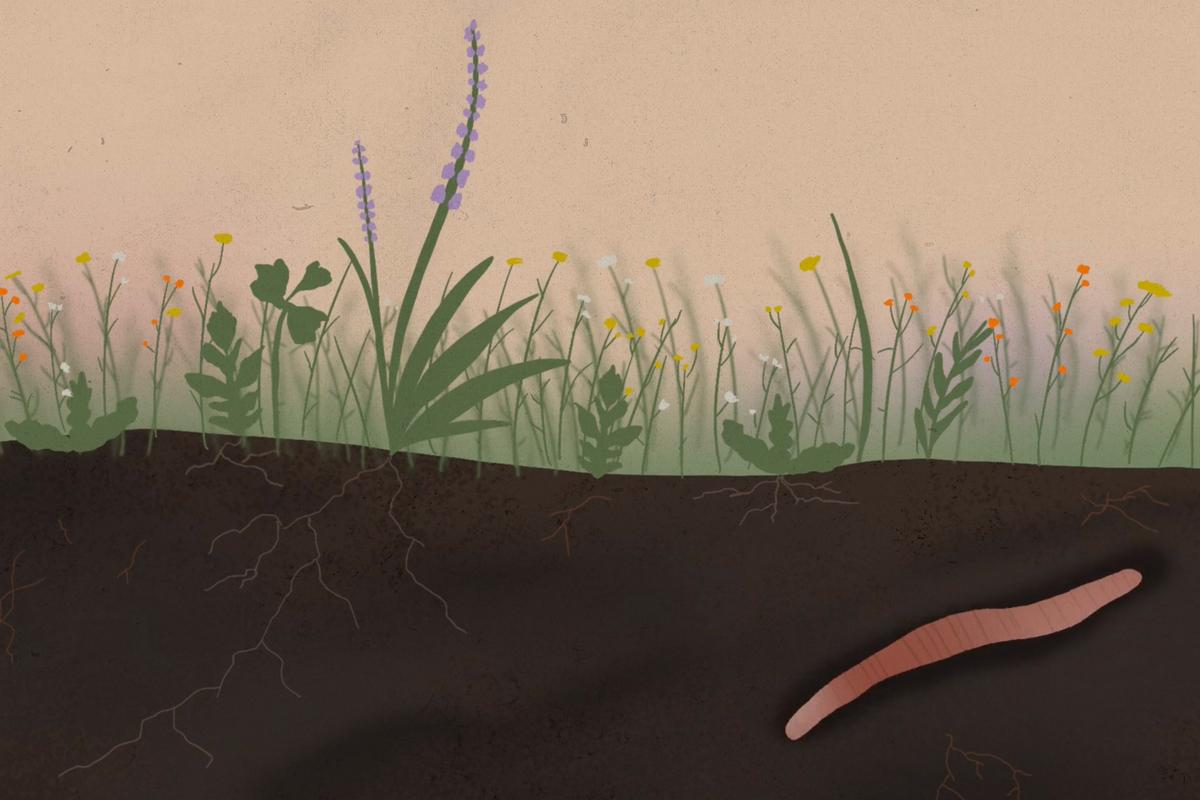
Earthworms do not have a discernible mouth, a means to make sound, or ears, and most spend their lives burrowing below ground, eating soil and decaying organic matter. However, their behaviours produce sounds, which can reveal a surprising amount about the subterranean world in which they live. I’ve recently found myself leaning over a box of soil in the basement of my university department, headphones clutched to my ears, revelling in the soft, Velcro-like scrapes of earthworms eating.
It sounds like this: I have always loved earthworms. As a child on my parents’ allotment, I delighted in finding them in the soil as potatoes were dug in, fascinated by their soft, alien form wiggling in my hand. Now, I amuse my friends by ducking down in crowds at music festivals to rescue distressed earthworms from being squashed by the mob of muddy boots.
Until recently, my scientific research focused on the rapid patter and chop of bat echolocation calls, monitoring how their populations were responding to largely human-driven environmental change. I didn’t consider that the same ecoacoustic approaches could be applied below ground, to understand how earthworms are affected by us surface-dwellers. I finally had a way to connect my scientific research speciality with my ardour for earthworms in the soil.
Worm munch might seem like a curiosity, but it represents a much bigger change in how we understand nature. More than just the behaviour of single creatures, such sounds can also reveal the health of whole ecosystems – and the underground is emerging as a new acoustic frontier. Sound itself is a wave, a travelling vibration.
Vibrancy is a word often used to describe colour and life. A vibrant ecosystem, therefore, is one that hums with the sounds of life. While reading this essay, you can listen to a 15-minute recording of various sounds of the underground, collected in Oxfordshire in 2024: Monitoring nature’s sounds has a long history.
The ancient Greeks wrote poems and plays about birdsong and, in medieval England, the sounds of local birds gave many places their names. Today, an expert ornithologist will stand in a forest and conduct a bird survey using nothing but their eyes and ears. However, when bioacoustics researchers in the 20th century began to place microphones or hydrophones and recorders in the field for days, weeks or months – known as ‘passive acoustic monitoring’ – they discovered whole new natural soundscapes.
Extract — continue reading at the source.