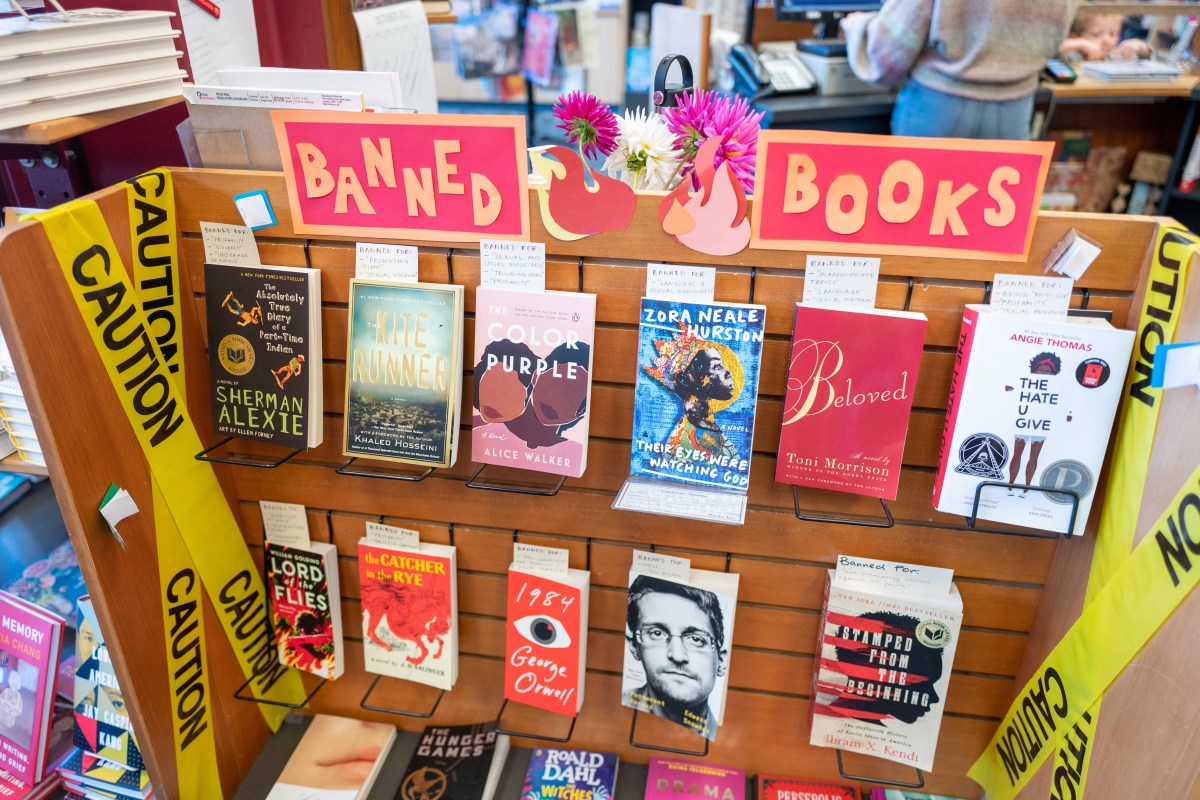
The culture wars have colonized so much of American life that buying beer, watching football or driving an electric car can now acquire an ideological accent. But perhaps nowhere is the partisan sorting stranger than the library, where the country has managed to make left and right difficult to locate even with the Dewey Decimal System. This week is Banned Books Week, the annual campaign begun in 1982 to defend access to contested books.
In 2026, however, the occasion illuminates a political role reversal hiding inside the censorship argument: liberals increasingly find themselves defending institutions, professional expertise and established procedures, while conservatives demand that ordinary citizens wrest authority back from credentialed gatekeepers. It is an odd arrangement for two political traditions historically associated, respectively, with challenging established authority and conserving it. Consider the American Library Association's most challenged titles of 2025.
They include Patricia McCormick's Sold, a novel about a girl trafficked into sexual slavery; Maia Kobabe's graphic memoir Gender Queer; Anthony Burgess' A Clockwork Orange; and Stephen Chbosky's The Perks of Being a Wallflower. There is nothing particularly surprising about the ideological divide over the books themselves. Gender Queer contains sexually explicit imagery and deals with gender and sexuality; Toni Morrison's The Bluest Eye, another perennial target, depicts racism, incest and child sexual abuse.
It makes intuitive sense that social conservatives would be more likely to object to such material in schools, while liberals would be more inclined to defend access to it. The strange part begins when each side explains who should have the authority to decide. Conservatives, traditionally associated with preserving institutions and established authority, increasingly cast librarians and educators as an unaccountable professional class whose judgment ordinary parents have every right to overrule.
Liberals, historically more comfortable challenging institutional gatekeepers, find themselves defending the expertise, discretion and autonomy of those same professionals. The cultural positions have barely moved but the politics of authority underneath them have almost traded places. A Moms for Liberty chapter in New York, for example, lists Gender Queer, The Bluest Eye and The Perks of Being a Wallflower among books it says contain sexually explicit material, asking why books should escape the sort of content warnings applied to movies and music.
Whatever one thinks of that argument, its political grammar is striking: distrust the experts, question the institution and give ordinary people more power over the professionals who run it. A generation ago, that would hardly have sounded like the conservative side of an American culture war. As is usually the case in the endless culture wars that now seem capable of turning almost any institution into a referendum on the soul of the country, there is another way to read the whole thing.
Extract — continue reading at the source.