In the fall of 2025, Jeff Dodge set up a six-foot folding table in the cafeteria of Cane Bay High School in Summerville, South Carolina, to conduct a taste test. When the first rush of about 150 hungry students hit, he was waiting with slow cookers filled with steaming marinara sauce and meatballs. Kids love a taste test, but they’re also discerning, and Dodge wasn’t sure what they would make of his product, a blend featuring both meat and mushrooms.
As students swarmed the table and tapped out their opinions on an iPad or scanned a QR code to use their phones, Dodge asked those who lingered to guess what kind of vegetable might have been mixed into the meat. Few of them could—the meatballs had tasted like moist, flavorful beef. The school enrolls a few thousand students, and Dodge estimates that the majority of them came by.
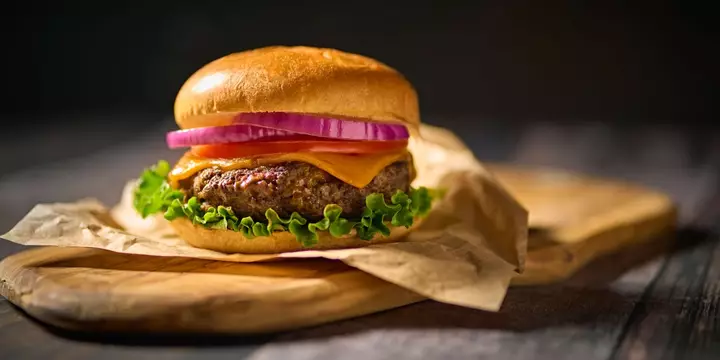
In the end, the survey showed that 92% of those who tried the meatballs wanted them on the menu; they easily cleared the bar to be added for the 2026–2027 school year. Comments described their flavor as “bussin’.” Through his consulting company, K–12 Food Solutions, Dodge was testing a new product called 50/Cut from the company Joyn. The proprietary blend of seemingly simple ingredients—available as meatballs, burgers, and ground meat—could help solve one of the most intractable challenges of the climate crisis, at least on the individual level: getting people to eat less meat, particularly beef.
Livestock production accounts for somewhere between 10% and 20% of all greenhouse-gas emissions related to human activity, and nearly two-thirds of that comes from ruminants like cows raised for meat and dairy products. Beef herds create four times the emissions of dairy herds per kilo of food produced. And for US households, food makes up as much as 30% of emissions.
Unlike other polluting sectors, such as electricity and transportation, cattle farming has little potential for a big fix. Ruminants produce about 30% of the methane associated with human activity, and this gas has 28 times more global-warming potential than carbon dioxide. What’s more, it would be virtually impossible to raise them in a perfectly climate-neutral manner.
Technologies to dampen the impact of their burps have been in the works for a while but have yet to scale. They also fix only part of the problem with red meat: Cows need a lot of land for pasture and for feed, which has made livestock a top driver of deforestation in the Amazon and elsewhere around the world. Even if the world stopped burning all fossil fuels tomorrow, emissions from agriculture would push the planet past 2 °C over preindustrial temperatures by 2070, Hedenus says.
Extract — continue reading at the source.